Dua for Breaking Fast – Arabic, English Translation
Ramadan is a month of mercy, forgiveness and countless blessings. Every Muslim who is fasting looks forward to the moment of Iftar, when they can finally break their fast after a day of patience and worship. At this time Muslims are encouraged to remember Allah by reciting the dua for breaking fast before taking the first bite or sip.
The dua of breaking is one of the most loved prayers because the Prophet Muhammad ﷺ taught us to remember Allah at the moment of Iftar. It is also a time when prayers are accepted making it a great chance to ask Allah for forgiveness, mercy, guidance and success in this life and the Hereafter.
Whether you are looking for the dua for breaking the real Arabic text its English meaning or its translation this full guide will help you learn everything, about the special prayer said when ending the daily fast.
Authentic Dua for Breaking Fast
Arabic
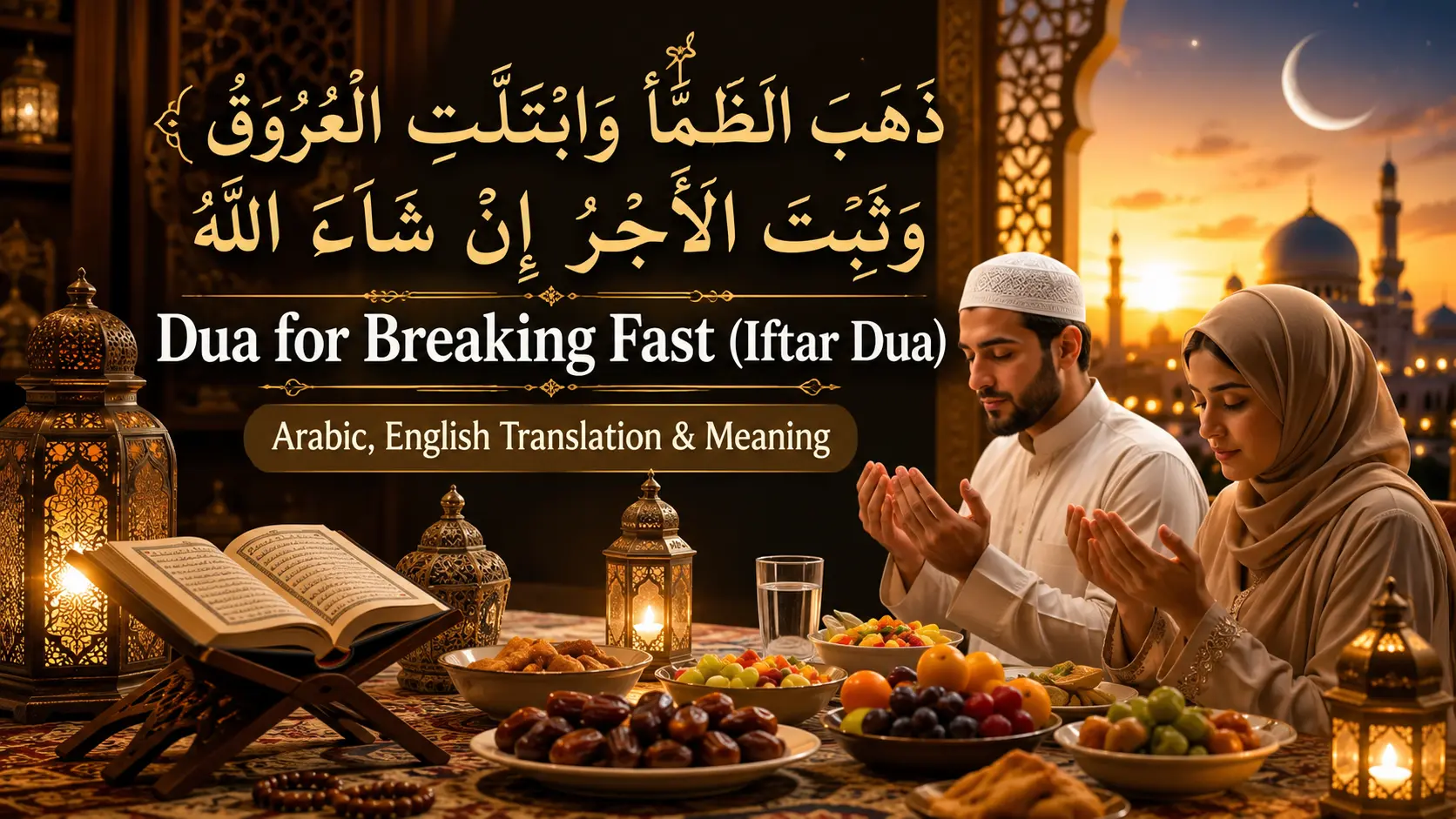
ذَهَبَ الظَّمَأُ وَابْتَلَّتِ الْعُرُوقُ وَثَبَتَ الْأَجْرُ إِنْ شَاءَ اللَّهُ
English Transliteration
Dhahaba az-zama’u wabtallatil-‘urooqu wa thabatal-ajru in shaa Allah.
English Translation
“The thirst has gone, the veins are moistened, and the reward is confirmed, if Allah wills.”
(Sunan Abu Dawood 2357 – Authentic)
Another Famous Dua Before Breaking the Fast
Many Muslims also recite the following dua at Iftar:
Arabic
اللهم إني لك صمت وعلى رزقك أفطرت
Transliteration
Allahumma inni laka sumtu wa ‘ala rizqika aftartu.
Translation
“O Allah! I fasted for You and I break my fast with Your provision.”
Although this supplication is widely known among Muslims, scholars have explained that its chain of narration is weaker than the first narration. Therefore, the authentic dua for breaking fast is the one beginning with Dhahaba az-zama’u.
Both supplications remind us that fasting is an act of worship performed solely for Allah, and every blessing we receive at Iftar comes from Him alone.

When Should You Recite the Dua for Breaking Fast?
A common question many Muslims ask is:
When should the dua on breaking fast be recited?
The dua is recited at the time of Iftar, immediately after sunset when the fast officially ends. As soon as the Adhan for Maghrib is called, Muslims should break their fast without unnecessary delay, following the Sunnah of Prophet Muhammad ﷺ.
The Prophet ﷺ preferred breaking his fast with fresh dates. If fresh dates were unavailable, he would eat dry dates, and if dates were unavailable, he would drink a few sips of water.
Following this Sunnah brings blessings and reminds us to keep our worship simple and sincere.
Why Is the Dua for Breaking Fast So Important?
The moment of Iftar is one of the most spiritually rewarding times during Ramadan.
The Messenger of Allah ﷺ informed us that the fasting person has a supplication that is not rejected when breaking the fast. This makes the dua for breaking fast Ramadan especially significant because it combines gratitude, patience, and hope in Allah’s mercy.
When you sincerely recite the dua of breaking fast, you acknowledge:
- Allah gave you the strength to complete the fast.
- Allah provided the food that ends your fast.
- Every reward comes only from Him.
- Your worship is accepted by His mercy alone.
This simple yet powerful dua strengthens your relationship with Allah every single day during Ramadan.
The Virtues of Making Dua at Iftar
One of the greatest blessings of Ramadan is that the time of Iftar is filled with mercy.
Islam encourages believers not only to recite the dua for breaking fast but also to make personal supplications immediately afterward. You can ask Allah for:
- Forgiveness of your sins
- Good health
- Halal sustenance
- Success in this world
- Protection from Hellfire
- Guidance for your family
- Acceptance of your fasting and prayers
- Entry into Jannah
This is why many scholars encourage Muslims to spend the first few moments of Iftar remembering Allah before becoming occupied with food and conversation.
Sunnah of Breaking the Fast in Islam
Reciting the dua for breaking fast is one of the beautiful Sunnahs of Prophet Muhammad ﷺ. Along with making dua, the Prophet ﷺ taught Muslims the proper manners of breaking their fast. Following these Sunnahs not only brings reward but also strengthens our connection with Allah.
1. Break the Fast Immediately After Sunset
The Prophet Muhammad ﷺ encouraged Muslims not to delay Iftar once the sun has set.
He ﷺ said:
“The people will continue to be upon goodness as long as they hasten to break the fast.”
(Sahih al-Bukhari & Sahih Muslim)
This means that once Maghrib begins, a Muslim should recite the dua on breaking fast and then eat or drink without unnecessary delay.
2. Break the Fast with Dates
One of the most beloved Sunnahs is breaking the fast with fresh dates.
Anas ibn Malik (RA) reported:
“The Messenger of Allah ﷺ used to break his fast with fresh dates before praying. If there were no fresh dates, then with dry dates, and if there were none, he would drink a few sips of water.”
(Sunan Abu Dawood)
Dates provide natural energy after many hours of fasting and are rich in essential nutrients. If dates are not available, drinking water is also part of the Sunnah.
3. Begin with the Dua
Before eating, Muslims should remember Allah by reciting the authentic dua of breaking fast.
Dhahaba az-zama’u wabtallatil-‘urooqu wa thabatal-ajru in shaa Allah.
This beautiful supplication reminds us that Allah has blessed us with the ability to complete another day of fasting.

Is There a Dua After Breaking Fast?
Many Muslims search for dua after breaking fast, wondering if there is a separate supplication once they finish eating.
There is no authentic hadith that specifies a special dua only after completing the meal at Iftar. However, Muslims are encouraged to continue making personal duas because the time around Iftar is a blessed moment when supplications are accepted.
You may ask Allah for:
- Forgiveness
- Mercy
- Good health
- Halal Rizq
- Protection from difficulties
- Success in this life and the Hereafter
- Acceptance of your fasting and prayers
The doors of Allah’s mercy remain open for those who sincerely call upon Him.
Can You Make Personal Duas at Iftar?
Absolutely.
Besides the authentic dua for breaking fast Ramadan, every Muslim can make personal supplications in their own language.
You can ask Allah for:
- Parents’ health
- Children’s success
- Marriage
- Employment
- Business blessings
- Relief from hardship
- Guidance
- Jannah
- Protection from Hellfire
The Prophet ﷺ informed us that the fasting person’s supplication at the time of breaking the fast is not rejected. Therefore, never miss this precious opportunity.
Common Mistakes While Breaking the Fast
Although Ramadan is a month of worship, many people unknowingly make mistakes during Iftar.
Delaying Iftar
Waiting several extra minutes after Maghrib without reason goes against the Sunnah.
Forgetting the Dua
Many people become busy preparing food and forget to recite the dua break fast before eating.
Wasting Food
Islam teaches moderation. Preparing excessive food that goes to waste is discouraged.
Eating Too Much
Overeating immediately after fasting can make a person lazy for Maghrib prayer and Taraweeh. The Prophet ﷺ always encouraged moderation in eating.
Ignoring Gratitude
Every meal is a blessing from Allah. Thank Him sincerely after completing your fast.
Why Every Muslim Should Learn the Dua for Breaking Fast
Children and adults alike should memorize the authentic dua for breaking fast because it is easy to remember and carries immense spiritual value.
Teaching this dua to family members helps preserve the Sunnah and encourages everyone to remember Allah before enjoying the blessings of Iftar.

Frequently Asked Questions
Which is the authentic dua for breaking fast?
The most authentic dua for breaking fast is:
Dhahaba az-zama’u wabtallatil-‘urooqu wa thabatal-ajru in shaa Allah.
It is narrated in Sunan Abu Dawood (2357) and is regarded as authentic by scholars.
Can I recite the dua before eating?
Yes. The dua is recited at the moment of Iftar when the fast ends. After reciting it, you may begin eating or drinking.
What should I eat first?
Following the Sunnah, it is recommended to break your fast with:
Fresh dates
Dry dates
Water if dates are unavailable
These simple foods provide quick hydration and energy after a long day of fasting.
Can I make dua in English?
Yes.
While the authentic Arabic supplication should be memorized if possible, you may also ask Allah in English, Urdu, or any language you understand. Allah knows every language and hears every sincere prayer.
Is the dua accepted while breaking the fast?
Yes.
The time of Iftar is among the blessed moments for making dua. Muslims are encouraged to ask Allah sincerely for both worldly needs and success in the Hereafter.
Should children learn this dua?
Definitely.
Teaching children the dua of breaking fast helps them develop a love for Ramadan and encourages them to follow the Sunnah from an early age.
Parents can recite the dua together with their children every evening during Ramadan until they memorize it naturally.