
Online Earning Halal or Haram? The Complete Islamic Answer
Introduction to Online Earning in the Digital Age
In today’s digital world, many people are working through the internet. Freelancing, blogging, YouTube, affiliate marketing, and online businesses have become common ways to earn money. But many Muslims ask an important question: online earning halal or haram?
This question is especially important for Muslims who want to ensure their income follows Islamic teachings. Islam encourages hard work and earning a livelihood, but it also sets clear rules about halal and haram income. Because of this, understanding whether online earning halal or haram depends on the type of work being done is essential.
The internet itself is simply a tool. It can be used for good purposes or harmful ones. If someone uses the internet to provide beneficial services or sell halal products, their income can be permissible. But if the work involves deception, gambling, interest, or immoral content, then the ruling changes. Therefore, the question online earning halal or haram cannot be answered with a simple yes or no without understanding the details.
Muslims who earn money online should always check whether their work aligns with Islamic values. By following the principles of honesty, fairness, and lawful trade, it is possible to earn halal income even in the digital world.
The Importance of Halal Income in Islam
In Islam, earning money is not just a financial activity it is also a spiritual responsibility. The income a Muslim brings into their home affects their worship, their family, and even their acceptance of prayers.
The Prophet Muhammad (peace be upon him) emphasized that Allah accepts only what is pure and lawful. That means if a person earns money through haram means, the blessings in their wealth disappear, even if the amount is large.
Halal income is called “Rizq Tayyib”, which means pure and good sustenance. Muslims are encouraged to seek lawful income through honest effort and ethical work.
Quranic Principles About Lawful Earnings
The Qur’an highlights the importance of lawful earnings and fairness in trade. Islam encourages business, trade, and entrepreneurship, but it strictly forbids exploitation, cheating, and unjust profit.
Islamic economic principles revolve around:
- Justice in transactions
- Transparency in agreements
- Avoiding harm to others
- Staying away from interest (riba) and gambling
These principles apply to both traditional businesses and digital businesses.
Whether someone runs a shop in a market or sells services online, the same rules apply.
Why Halal Rizq Brings Barakah
Halal income carries something extremely valuable: barakah (blessing).
Barakah means that even a small amount of money can bring peace, satisfaction, and benefit to a person’s life. On the other hand, haram income may appear large but often leads to stress, loss, or spiritual emptiness.
Many scholars explain that the key to a peaceful life is not just earning money but earning it in the right way.
For Muslims who earn online, this principle becomes even more important because the internet contains many opportunities but also many unethical or forbidden sources of income.
What Does Halal and Haram Mean in Islam?
To understand the ruling on online earning, we first need to understand the basic concepts of halal and haram in Islamic law.
Definition of Halal Income
Halal income refers to money earned through lawful and ethical means according to Islamic teachings. It includes income from honest work, trade, services, and business activities that do not violate Islamic rules.
Examples of halal work include:
- Teaching or education
- Freelancing services
- Selling lawful products
- Writing or content creation
- Technical or professional services
Any job that benefits society and follows ethical guidelines can generally be considered halal.
Definition of Haram Income
Haram income refers to money earned through activities that Islam clearly forbids.
Common examples include:
- Interest-based transactions (riba)
- Gambling
- Fraud or deception
- Selling alcohol, drugs, or haram products
- Promoting immoral or harmful content
If a job directly supports or promotes these activities, then the income becomes haram.
This principle applies to both offline jobs and online jobs equally.
Is Online Earning Halal or Haram in Islam?
Is Online Earning Halal or Haram in Islam?
Many scholars agree that online earning is not automatically haram. The ruling depends on the type of work and how the income is generated. When people ask online earning halal or haram, scholars usually explain that Islam allows business and trade in any form as long as the activity itself is halal.
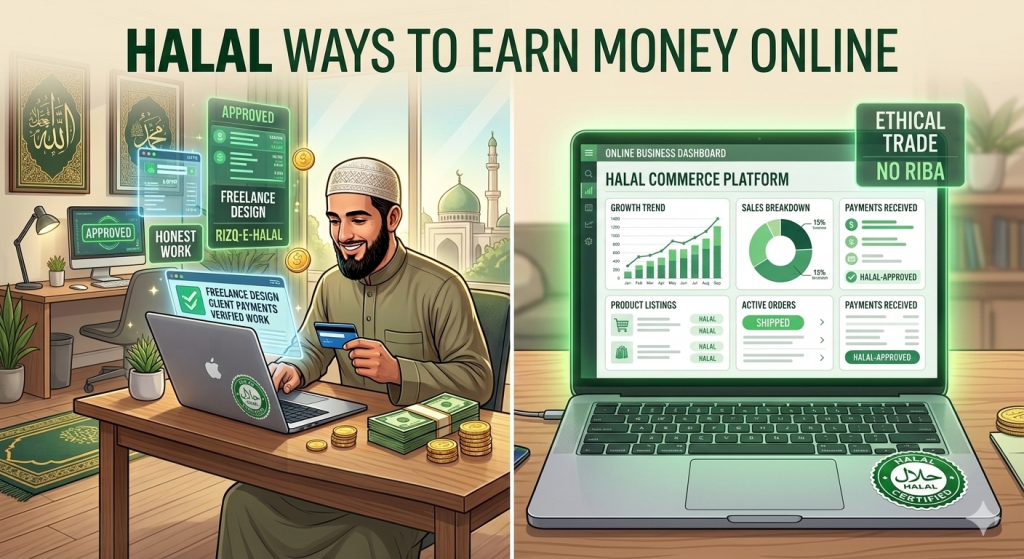
For example, if someone earns money by designing websites, writing articles, teaching online, or selling halal products through an online store, their income is generally considered halal. These activities provide real services and benefit others.
However, if someone earns money from gambling websites, promoting alcohol, spreading immoral content, or running scams, then the income becomes haram. In these situations, the issue is not the internet itself but the nature of the work.
Therefore, when discussing online earning halal or haram, the key factor is the type of activity involved. Islam focuses on ethical behavior, transparency, and lawful transactions. If these conditions are fulfilled, earning money online can be a legitimate and halal source of income.
The Basic Islamic Rule About Business and Work
In Islamic jurisprudence, the general rule regarding business and transactions is:
Everything is permissible unless it is clearly forbidden.
This means Muslims are allowed to explore new business models, including online income streams, as long as they avoid prohibited elements.
Online earning therefore becomes halal when:
- The work itself is permissible
- The agreement between parties is clear
- No deception or exploitation occurs
The internet is simply a tool. Just like a knife can be used for cooking or harming someone, the internet can be used for halal work or haram activities.
Conditions That Make Online Earning Halal
For Muslims who want to earn online while staying within Islamic guidelines, several important conditions must be met.
The Work Must Be Permissible
The first and most important condition is that the job itself must be halal.
For example, working as a freelancer designing websites, writing articles, translating documents, or managing social media accounts is generally permissible.
Similarly, online teaching, graphic design, and programming are considered halal professions.
On the other hand, working for industries that promote alcohol, gambling, or immoral entertainment would make the income questionable or haram.
Honest Transactions and Agreements
Islam places a strong emphasis on honesty in business.
When working online, freelancers and clients should clearly agree on:
- The work to be done
- The payment amount
- The deadline for delivery
Scholars explain that the reward for a task should be known beforehand and clearly defined in the agreement.
This prevents disputes and ensures fairness between both parties.
No Deception or Fraud
Deception is strictly forbidden in Islam.
Unfortunately, online work sometimes involves scams, fake services, or misleading claims.
Examples of unethical behavior include:
- Selling fake products
- Copying someone else’s work and claiming it as your own
- Promising services that you cannot deliver
Islam strongly condemns dishonesty in business, whether it happens in a physical store or on the internet.
Situations Where Online Income Becomes Haram
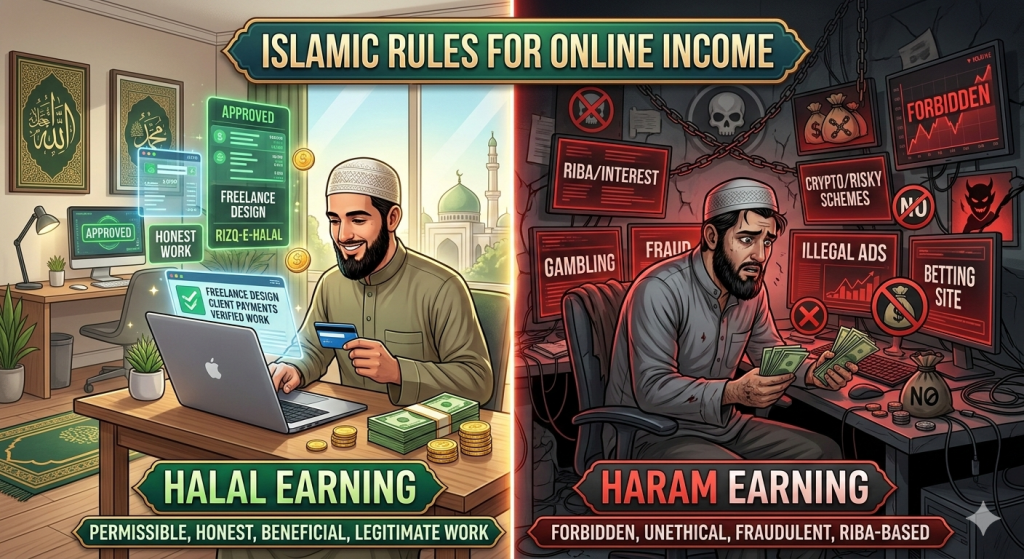
Even though online earning can be halal, certain activities make it haram.
Understanding these situations helps Muslims avoid questionable sources of income.
Working With Haram Products or Services
If an online job directly supports prohibited products, it becomes haram.
Examples include:
- Promoting alcohol brands
- Advertising gambling websites
- Selling drugs or illegal items
In such cases, the income becomes unlawful because the work contributes to activities that Islam forbids.
Gambling, Interest, and Fraudulent Schemes
Many online income opportunities involve hidden forms of gambling or interest.
Examples include:
- Online betting platforms
- Crypto gambling games
- Interest-based investment schemes
- Ponzi or pyramid schemes
These activities are clearly prohibited in Islam because they involve exploitation and unjust gain.
Spreading Immorality or Harmful Content
Another major issue in online work is content creation.
If someone earns money by spreading:
- Explicit material
- False information
- Defamation or gossip
- Harmful ideologies
Then the income becomes haram.
Content creators must ensure that their work benefits society and does not spread corruption or harm.
Examples of Halal Online Earning Methods
There are many legitimate ways Muslims can earn online while staying within Islamic guidelines.
Freelancing and Digital Services
Freelancing is one of the most popular halal online income methods.
Examples include:
- Writing articles
- Graphic design
- Web development
- Translation services
- Digital marketing
Freelancers offer services to clients worldwide and receive payment for their skills.
As long as the work itself is halal and the agreement is clear, freelancing is considered permissible.
Blogging, Islamic Content Creation, and Education
Another powerful halal income method is content creation.
Muslims can create blogs, YouTube channels, or educational platforms that provide valuable knowledge.
For example:
- Islamic education channels
- Technology reviews
- Language learning platforms
- Skill-based tutorials
Content creation can also become a form of dawah when it spreads beneficial knowledge.
E-commerce and Online Businesses
E-commerce has grown into a multi-trillion-dollar industry.
Muslims can sell halal products online such as:
- Clothing
- Books
- Digital products
- Educational courses
Online stores allow entrepreneurs to build businesses while reaching customers globally.
Examples of Haram Online Earning Methods
Just as there are halal opportunities online, there are also many haram ones.
Common examples include:
- Online gambling websites
- Adult content platforms
- Scam investment schemes
- Selling counterfeit products
- Promoting harmful or immoral content
Many of these activities promise quick money but carry serious ethical and religious consequences.
Guidelines to Ensure Your Online Income is Halal
Muslims who want to earn online should follow a few important guidelines.
- Always check the nature of the work
- Avoid businesses involving interest or gambling
- Maintain honesty in all transactions
- Deliver work exactly as promised
- Avoid promoting harmful or immoral content
Following these principles helps ensure that online income remains halal.
The Role of Intention (Niyyah) in Online Earnings
In Islam, actions are judged not only by what we do but also by why we do it.
A Muslim earning online with the intention of supporting their family, helping others, and living ethically will receive spiritual reward along with financial benefit.
The intention transforms ordinary work into an act of worship.
When someone works honestly and uses their income for good purposes such as charity, family support, or education their earnings become a source of blessings.
Conclusion
So, is online earning halal or haram?
The answer is clear: online earning itself is halal, but the method used determines whether the income remains permissible.
Islam encourages Muslims to work, build businesses, and seek financial independence but always within ethical boundaries.
When online work is honest, beneficial, and free from prohibited elements like fraud, gambling, and immoral content, it becomes a lawful and rewarding source of income.
The internet has opened countless opportunities for Muslims to earn while spreading knowledge, providing services, and helping others.
The key is simple: earn with integrity, follow Islamic principles, and seek barakah in your wealth.
Is freelancing halal in Islam?
Yes, freelancing is generally halal if the work itself is permissible and does not involve prohibited activities such as fraud, gambling, or promoting haram products.
Is earning money from YouTube halal?
It depends on the content and advertisements. If the content is beneficial and does not promote haram elements, many scholars consider it permissible.
Is online trading halal?
Online trading can be halal if it avoids interest, speculation, and gambling-like behavior. Islamic finance principles should be followed.
Can Muslims start an online business?
Yes. Islam encourages business and entrepreneurship as long as the products and services offered are halal.
How can I make sure my online income is halal?
Check the nature of your work, avoid prohibited industries, maintain honesty in transactions, and follow Islamic ethical guidelines.