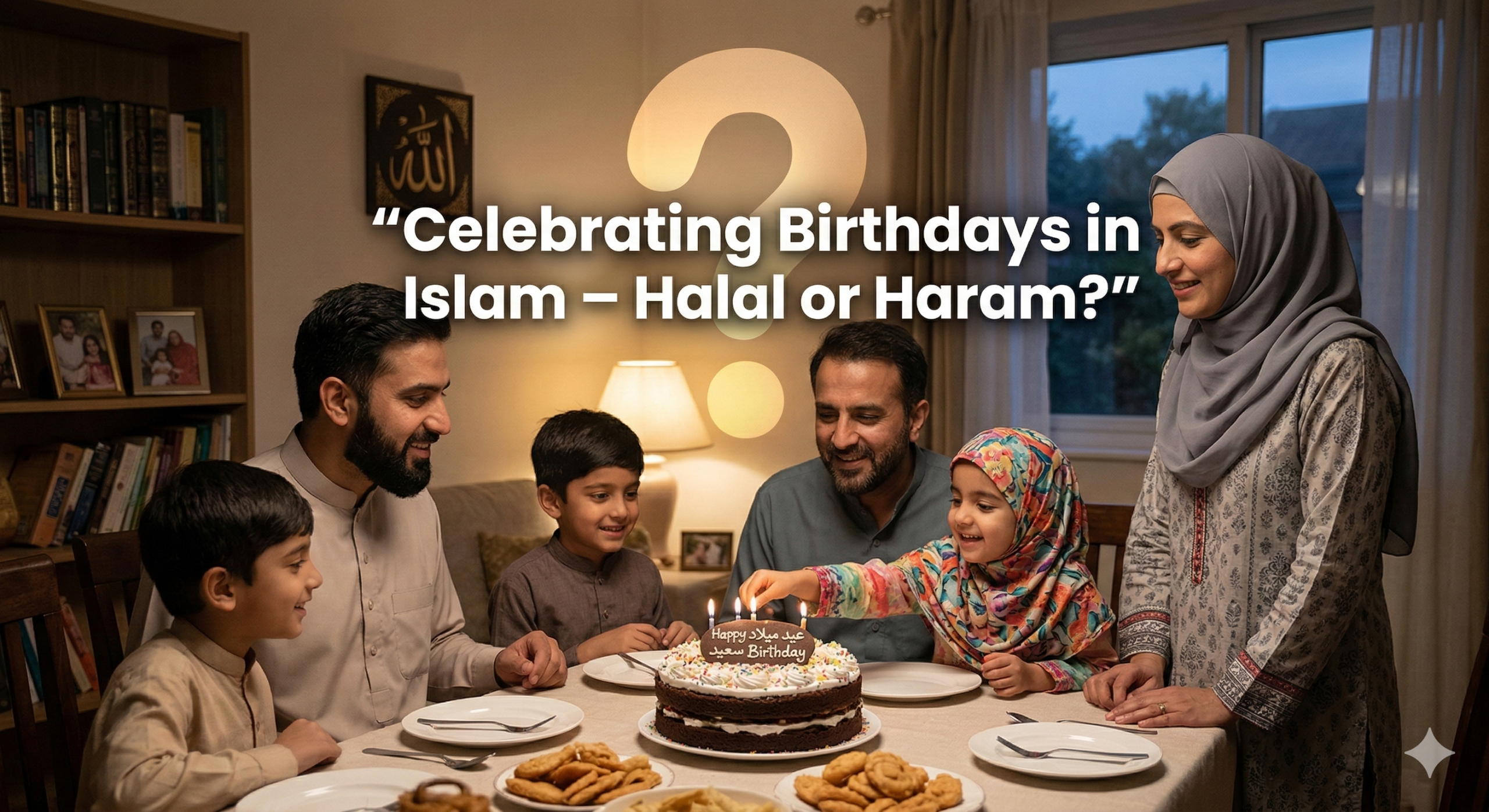
Celebrating Birthdays in Islam – Halal or Haram?Important Islamic Ruling
Celebrating Birthdays in Islam
Introduction to Birthdays in Islamic Perspective
Why Muslims Ask About Birthday Celebrations
Celebrating birthdays in Islam is a topic many Muslims discuss today. With the influence of modern culture, some people celebrate birthdays regularly, while others question whether celebrating birthdays in Islam is allowed according to Islamic teachings.
This raises an important question: Does Islam allow birthday celebrations? The answer is not always simple. Islamic teachings focus strongly on following the guidance of the Qur’an and the traditions of the Prophet Muhammad ﷺ. Whenever a new practice becomes common among Muslims, scholars usually analyze it carefully to determine whether it aligns with Islamic principles.
Birthdays are not originally part of Islamic religious practice. They developed over time in different cultures around the world. Today, they are widely celebrated in many countries regardless of religion. For Muslims who want to follow Islamic teachings closely, understanding the religious perspective on birthdays becomes important.
At the same time, the discussion about birthdays is not just about cakes or gifts. It touches on deeper questions such as innovation in religion (bid‘ah), cultural traditions, and the intention behind celebrations. Some Muslims see birthdays simply as social gatherings, while others view them as religiously problematic.
Understanding the Islamic perspective requires looking at the teachings of Islam, the practices of early Muslims, and the opinions of scholars.
Cultural Practices vs Religious Teachings
One of the key concepts in Islamic law is the difference between religious acts and cultural customs. Islam allows many cultural practices as long as they do not contradict the teachings of the Qur’an and Sunnah.
For example, different Muslim cultures have unique wedding traditions, clothing styles, and food customs. These differences are generally accepted because they do not change the core teachings of Islam. Birthdays, however, sometimes fall into a gray area because they resemble celebrations that have religious or historical roots in other cultures.
Historically, birthday celebrations existed in ancient civilizations such as Egypt, Greece, and Rome. In some cases, birthdays were connected to pagan rituals or religious beliefs. Because Islam strongly emphasizes monotheism and avoiding imitation of non-Islamic religious practices, scholars carefully analyze whether certain traditions should be adopted by Muslims.
Another factor is intention (niyyah). In Islam, actions are judged by intentions. If a person celebrates a birthday purely as a social gathering with family and gratitude to Allah for another year of life, some scholars consider it less problematic. If the celebration involves imitation of religious rituals or includes prohibited activities, it becomes more concerning.
This distinction between culture and religion plays a major role in the debate about birthdays in Islam.
What Does Islam Say About Celebrations?
Concept of Celebrations in Islamic Teachings
Islam does not prohibit happiness or celebrations. In fact, the religion encourages believers to express joy and gratitude to Allah for His blessings. However, Islam also establishes clear guidelines about religious festivals and celebrations.
The Prophet Muhammad ﷺ taught that Muslims have specific religious celebrations that bring the community together. These celebrations include prayers, charity, gatherings, and expressions of gratitude. They are meant to strengthen faith and unity among Muslims.
Because of this, scholars often discuss whether adding new celebrations—such as birthdays—could lead to innovations in religion. In Islamic teachings, innovations that change religious practices are generally discouraged. The Prophet ﷺ emphasized the importance of following the guidance he delivered to the Muslim community.
At the same time, everyday social activities are not automatically considered religious innovations. For example, celebrating achievements, hosting family dinners, or giving gifts are normal aspects of social life.
The discussion about birthdays focuses on whether they fall into the category of religious celebrations or simply cultural customs. This distinction explains why scholars sometimes have different interpretations regarding the permissibility of birthdays.
The Two Islamic Festivals
Islam clearly recognizes two major religious festivals that are celebrated worldwide by Muslims.
Eid al-Fitr
Eid al-Fitr is celebrated at the end of the holy month of Ramadan. It marks the completion of a month of fasting, prayer, and spiritual reflection. Muslims gather for special prayers, give charity known as Zakat al-Fitr, and spend time with family and friends.
This celebration emphasizes gratitude to Allah for giving believers the strength to complete the fast. It is also a time when communities unite, forgive one another, and spread happiness among children and families.
Eid al-Adha
Eid al-Adha occurs during the Islamic month of Dhul-Hijjah and commemorates the devotion of Prophet Ibrahim (Abraham) who was willing to sacrifice his son in obedience to Allah. Muslims perform the ritual of Qurbani (animal sacrifice) and distribute meat to family members, neighbors, and the poor.
Both Eids are deeply rooted in Islamic tradition and have clear religious significance. Because Islam already provides these celebrations, some scholars argue that adding other annual celebrations such as birthdays may not align with the original teachings.
Scholarly Opinions About Birthday Celebrations
Viewpoint of Scholars Who Consider It Impermissible
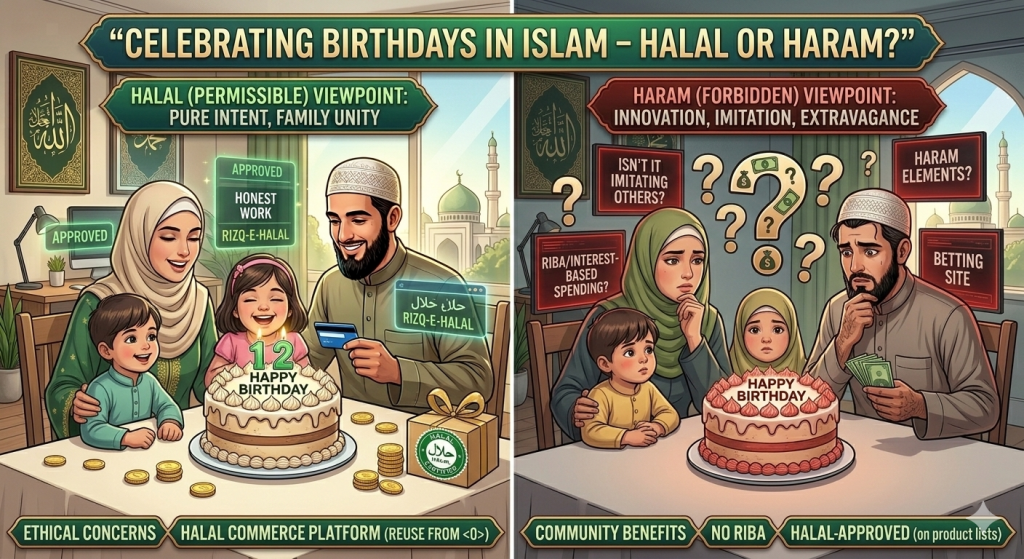
Some scholars believe celebrating birthdays in Islam should be avoided because it was not practiced by the Prophet Muhammad ﷺ or his companions. According to this view, celebrating birthdays in Islam may fall under innovations if it becomes a religious tradition.
Their argument is based on the principle that acts of celebration connected to specific dates should have clear evidence in Islamic teachings. Since the Prophet and his companions never celebrated birthdays, these scholars consider it an innovation (bid‘ah) in religious practice.
They also point out that many birthday traditions—such as blowing out candles, making wishes, and extravagant parties—originated in non-Islamic cultures. Some scholars worry that adopting these traditions could lead Muslims away from the simplicity and focus on worship that Islam promotes.
Another concern is the presence of activities that may be prohibited in Islam, such as music, wasteful spending, or mixed gatherings without proper boundaries. Because many birthday celebrations include these elements, scholars sometimes advise Muslims to avoid the practice altogether.
Their conclusion is that Muslims should express gratitude to Allah daily rather than associating special significance with the date of birth.
Viewpoint of Scholars Who Allow Simple Acknowledgment
Other scholars take a more flexible approach. They argue that birthdays themselves are not acts of worship, but rather social customs. If a celebration does not include prohibited activities and is simply a gathering of family members expressing gratitude to Allah, it may be permissible.
According to this view, giving gifts, sharing food, and thanking Allah for another year of life can be positive actions. The key condition is that the celebration should not imitate religious rituals or involve haram practices.
Some scholars encourage Muslims to use birthdays as moments of reflection. Instead of focusing only on parties or gifts, they suggest thinking about how one has used their time in life and how they can improve their relationship with Allah.
This approach emphasizes moderation and intention. A simple family meal or prayer of gratitude may be considered acceptable, while extravagant celebrations are discouraged.
Historical Background
Did the Prophet or Companions Celebrate Birthdays?
Historical records from early Islamic history do not show that the Prophet Muhammad ﷺ or his companions celebrated birthdays. Their lives focused primarily on worship, community building, and spreading the message of Islam.
They expressed gratitude to Allah regularly through prayers, charity, and acts of kindness rather than annual personal celebrations.
Because early Muslims did not celebrate birthdays, many scholars see this as an indication that the practice was not part of the original Islamic lifestyle.
Development of Birthday Culture in Modern Society
Birthday celebrations became more common globally during the modern era. With globalization, media influence, and cultural exchange, birthday traditions spread to many societies—including Muslim communities.
Today, it is common to see birthday parties in schools, workplaces, and families across the world. Cakes, candles, and gifts have become symbols of celebration regardless of religious background.
This global cultural influence explains why many Muslims today question the Islamic ruling on birthdays.
Celebrating the Prophet’s Birth (Mawlid)
What is Mawlid?
Mawlid refers to gatherings held by some Muslims to commemorate the birth of the Prophet Muhammad ﷺ. These events may include recitation of poetry, remembrance of the Prophet’s life, and acts of charity.
Differences of Opinion Among Scholars
Just like birthdays, Mawlid is also a topic of scholarly debate. Some scholars consider it a good practice if it encourages love for the Prophet and involves acts of worship. Others believe it should be avoided because it was not practiced by early Muslims.
This difference of opinion reflects the broader discussion about introducing new celebrations in Islamic practice.
Cultural Birthday Celebrations in Muslim Societies
Birthday Practices Around the World
In many Muslim countries, celebrating birthdays in Islam has become a cultural practice rather than a religious ritual. Families may gather, share food, and give gifts without believing that celebrating birthdays in Islam is part of religious worship.
These differences often reflect cultural traditions rather than religious obligations.
Influence of Western Culture
Global media and cultural exchange have played a large role in spreading birthday traditions. Television, movies, and social media often portray birthdays as major events.
Because of this influence, many young Muslims grow up participating in birthday celebrations even if their families have different religious views about the practice.
Islamic Guidelines for Muslims
Avoiding Haram Elements
Muslims who choose to acknowledge birthdays should avoid activities that contradict Islamic values. These include wasteful spending, inappropriate entertainment, or neglecting religious responsibilities.
Focusing on Gratitude and Reflection
Instead of emphasizing material celebrations, Muslims can focus on thanking Allah for the gift of life. Reflecting on personal growth, setting spiritual goals, and helping others can make the day meaningful without turning it into an extravagant celebration.
Conclusion
The discussion about celebrating birthdays in Islam shows that Muslims should seek knowledge and follow authentic teachings. Whether someone avoids or acknowledges celebrating birthdays in Islam, the priority should always be gratitude to Allah and adherence to Islamic principles.
Muslims who want to follow Islamic teachings carefully often choose the path of moderation. They focus on gratitude to Allah, reflection on their life journey, and strengthening their relationship with their faith.
Understanding the Islamic perspective allows believers to make informed decisions while maintaining respect for different scholarly views within the Muslim community.