How to Do Ghusl Properly:Easy Guide
What is Ghusl?
Meaning and Importance in Islam
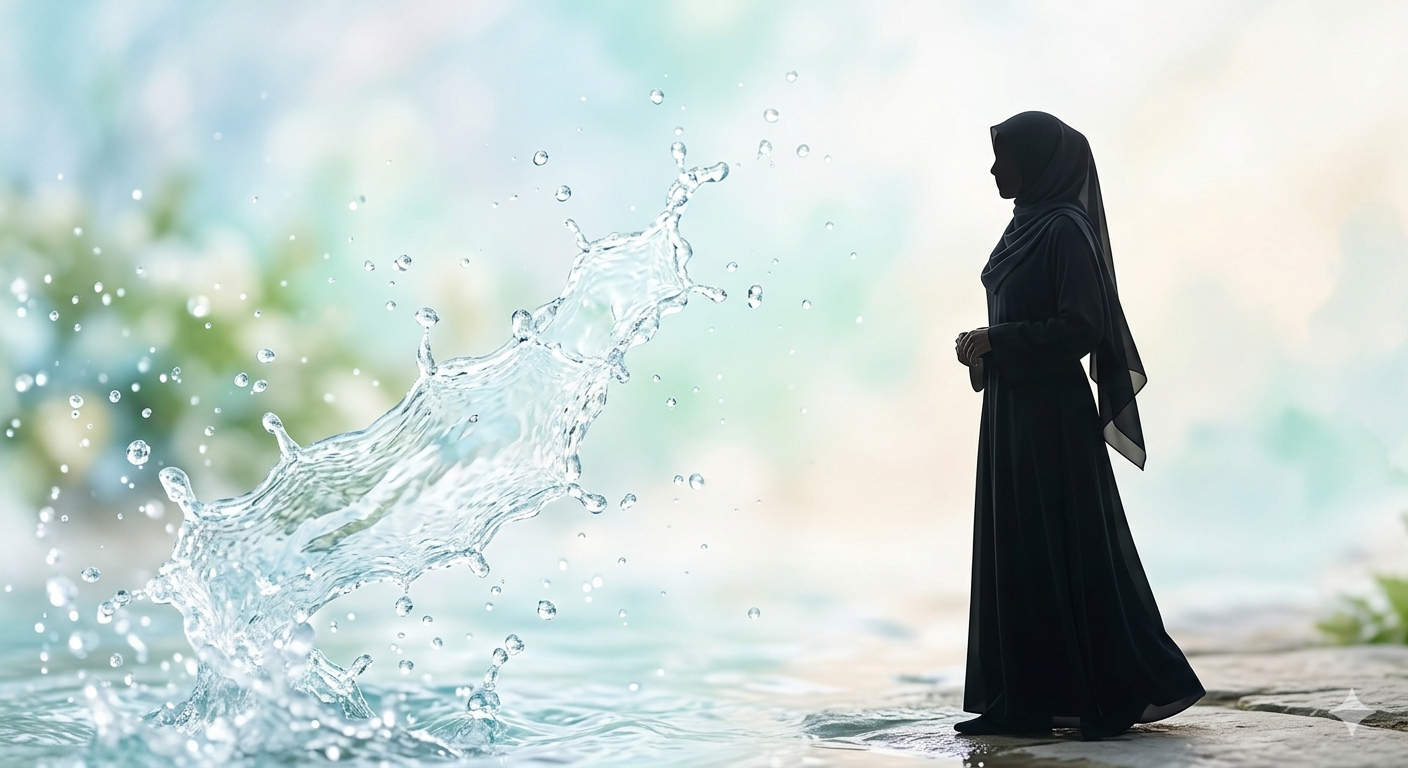
If you’ve ever wondered what is ghusl, think of it as more than just a bath it’s a complete purification ritual in Islam that carries both physical and spiritual significance. Ghusl is required in specific situations to ensure a Muslim is in a state of purity before performing acts of worship such as Salah (prayer). It’s not simply about washing the body; it’s about resetting oneself, both externally and internally, before standing in front of Allah.
The beauty of ghusl lies in its simplicity and depth. While the steps are straightforward, the intention behind them elevates it to an act of worship. Imagine it like rebooting your system removing impurities and preparing yourself for a fresh spiritual connection. That’s exactly what ghusl represents in a believer’s life.
Islam places great emphasis on cleanliness, and ghusl is a reflection of that principle. It ensures that a person is not only physically clean but also spiritually ready. This dual purpose makes it an essential part of a Muslim’s daily and spiritual routine.
When Ghusl Becomes Obligatory
Understanding when ghusl becomes mandatory is crucial. It’s not required for every situation, but there are specific circumstances where it becomes obligatory. These include after marital relations, ejaculation, completion of menstruation, and postnatal bleeding.
For women, how to do ghusl after period is especially important, as it marks the return to regular worship practices. Similarly, men must perform ghusl after certain conditions to regain ritual purity. These requirements ensure that acts of worship are performed in a state of complete cleanliness.
Knowing these conditions helps avoid confusion and ensures that religious obligations are fulfilled correctly. It’s like following a roadmap once you understand the rules, everything becomes much easier and more meaningful.
How to Do Ghusl (Step-by-Step Guide)
Preparation Before Ghusl
Before diving into how to do ghusl, it’s important to prepare both mentally and physically. The first step is making the intention (niyyah) in your heart. You don’t need to say it out loud just a sincere intention to purify yourself for the sake of Allah is enough.
Next, ensure that you have access to clean water. Remove any impurities from your body, such as dirt or anything that could prevent water from reaching the skin. This preparation phase is often overlooked, but it plays a key role in ensuring your ghusl is valid.
Think of it like preparing for an important task. You wouldn’t start cooking without gathering ingredients, right? Similarly, proper preparation ensures that your ghusl is complete and accepted.
Complete Ghusl Steps
Now let’s break down the ghusl steps in a simple and practical way. While there are variations, the core method remains consistent across Islamic teachings:
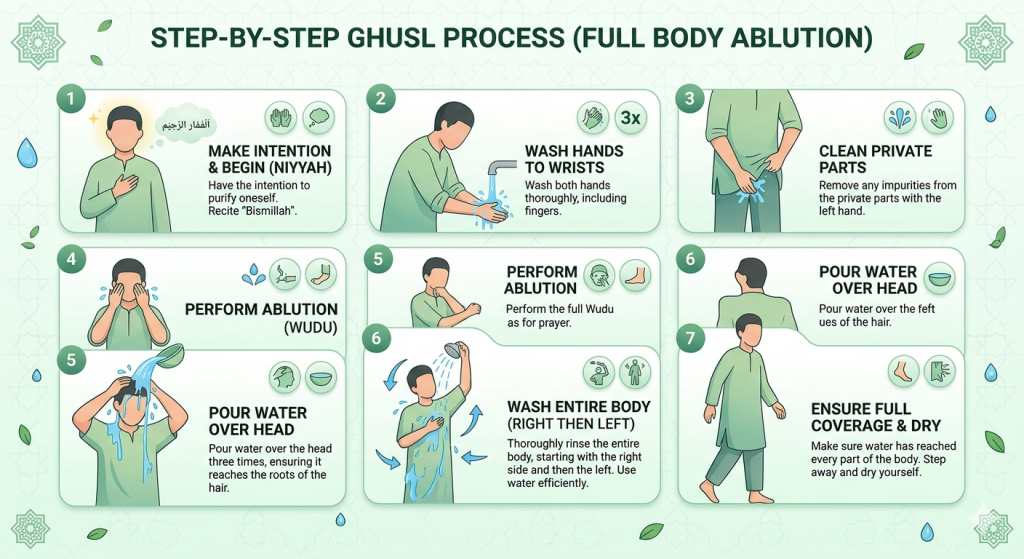
- Begin with the intention in your heart.
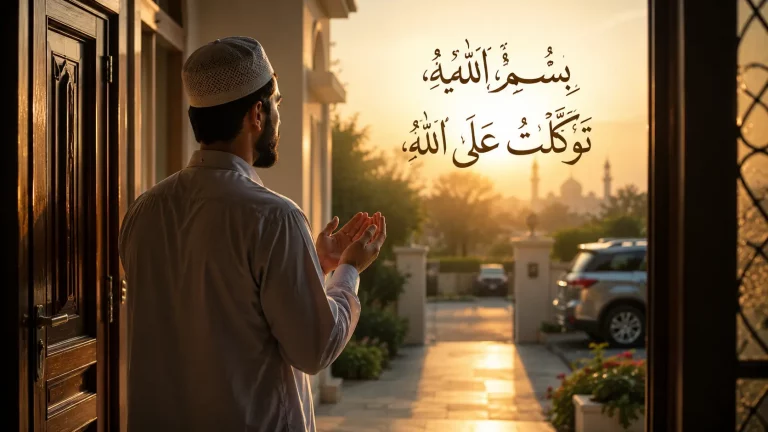
- Say “Bismillah” (in the name of Allah).
- Wash your hands thoroughly.
- Clean private parts to remove impurities.
- Perform wudu (ablution) like you do for prayer.
- Pour water over your head three times, ensuring it reaches the roots of your hair.
- Wash the entire body, starting from the right side, then the left.
These steps ensure that every part of your body is cleansed. The key is to make sure no area is left dry, even small hidden parts. It’s not about rushing it’s about being thorough and mindful.
Ghusl Steps Explained in Detail
Sunnah Method of Ghusl
The Sunnah method follows the way Prophet Muhammad (peace be upon him) performed ghusl. It includes all the essential steps but emphasizes proper order and mindfulness. Following this method brings additional spiritual rewards, as you are aligning your actions with the Prophet’s practice.
In the Sunnah method, special attention is given to cleanliness and sequence. For example, washing hands before starting and performing wudu before washing the entire body are key elements. These steps not only ensure cleanliness but also prepare you mentally for worship.
Obligatory Acts of Ghusl
While the Sunnah method is recommended, there are only a few obligatory acts that must be fulfilled for ghusl to be valid:
| Obligation | Description |
| Rinsing mouth | Water must reach inside the mouth |
| Cleaning nose | Water must reach inside the nostrils |
| Washing entire body | No dry spot should remain |
As long as these conditions are met, your ghusl is valid. Everything else adds perfection and reward to the act.
How to Do Ghusl After Period
Special Considerations for Women
When discussing how to do ghusl after period, there are a few additional considerations. Women must ensure complete cleanliness before performing ghusl. This includes confirming that menstruation has fully ended.
It is also recommended to untie braided hair if water cannot reach the roots. However, if water can reach the scalp, untying is not necessary. The focus is on ensuring that every part of the body is properly washed.
Common Mistakes to Avoid
Some common mistakes include rushing the process, missing areas like behind the ears, or not ensuring water reaches the scalp. These small oversights can affect the validity of ghusl.
Being mindful and taking your time can make a big difference. Think of it as a mindful ritual rather than a quick task.
How to Do Ghusl While Fasting
Does Ghusl Break the Fast?
A common question is about how to do ghusl while fasting and whether it affects the fast. The answer is simple: ghusl does not break the fast. You can perform it at any time during fasting hours.
However, care should be taken to avoid swallowing water while rinsing the mouth or nose. This is especially important during Ramadan.
Best Time to Perform Ghusl in Ramadan
While ghusl can be done anytime, many prefer to do it before Fajr prayer. This allows them to start the day in a state of purity.
How to Do Tayammum for Ghusl
When Tayammum is Allowed
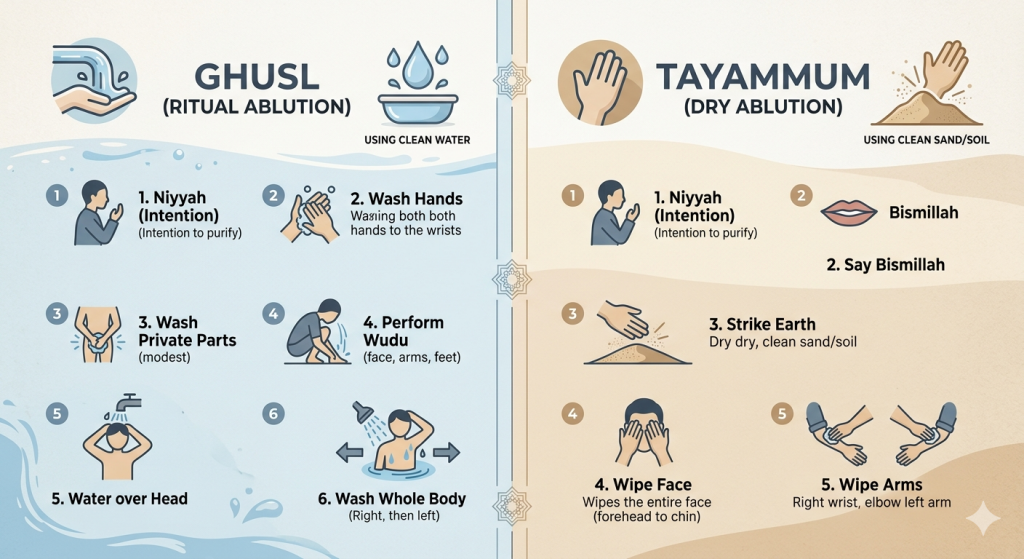
There are situations where water is not available or cannot be used due to illness. In such cases, Islam provides an alternative called tayammum. Understanding how to do tayammum for ghusl ensures that you can maintain purity even in difficult circumstances.
Step-by-Step Tayammum Method
The process is simple:
- Make intention
- Strike clean earth with hands
- Wipe face
- Wipe hands
This method highlights the flexibility and practicality of Islamic teachings.
Benefits and Spiritual Importance of Ghusl
Physical Cleanliness
Ghusl ensures full-body cleanliness, which is essential for hygiene. It helps remove sweat, dirt, and bacteria, promoting overall health.
Spiritual Purification
Beyond physical benefits, ghusl has deep spiritual meaning. It prepares a person for worship and strengthens their connection with Allah. It’s like clearing your mind and soul before an important meeting.
Conclusion
Ghusl is more than just a ritual it’s a complete system of purification that combines physical hygiene with spiritual readiness. Whether it’s understanding how to do ghusl, learning the correct ghusl steps, or knowing special cases like how to do ghusl after period and how to do ghusl while fasting, each aspect plays a vital role in a Muslim’s life. By following the correct method and understanding its importance, one can perform this act with confidence and sincerity.
1. What is ghusl in Islam?
Ghusl is a full-body purification ritual required in specific situations before performing acts of worship.
2. How to do ghusl step by step?
Make intention, wash hands, clean private parts, perform wudu, then wash the entire body thoroughly.
3. How to do ghusl after period?
Ensure menstruation has ended, then perform full ghusl ensuring water reaches the entire body and scalp.
4. Can you do ghusl while fasting?
Yes, ghusl does not break the fast, but avoid swallowing water.
5. What is tayammum for ghusl?
It is a dry purification method using clean earth when water is unavailable.