
Dua e Qunoot: Complete Guide to Dua e Qunoot in Witr
What Is Dua e Qunoot?
Out here in the quiet stretch of night prayer comes Dua e Qunoot soft, deep, full of reach. Not just words, but something closer: a voice leaning toward God when everything else has gone still. Witr holds space for it, each phrase rising after Isha fades into dark calm. “Qunoot” isn’t only a name it breathes meaning, like bending low, staying loyal, showing up with bare hands. Picture someone standing alone, head slightly bowed, speaking without performance. No armor, no mask, just need meeting presence. This is how honesty sounds mid-silence, why hearts lean into its weight.
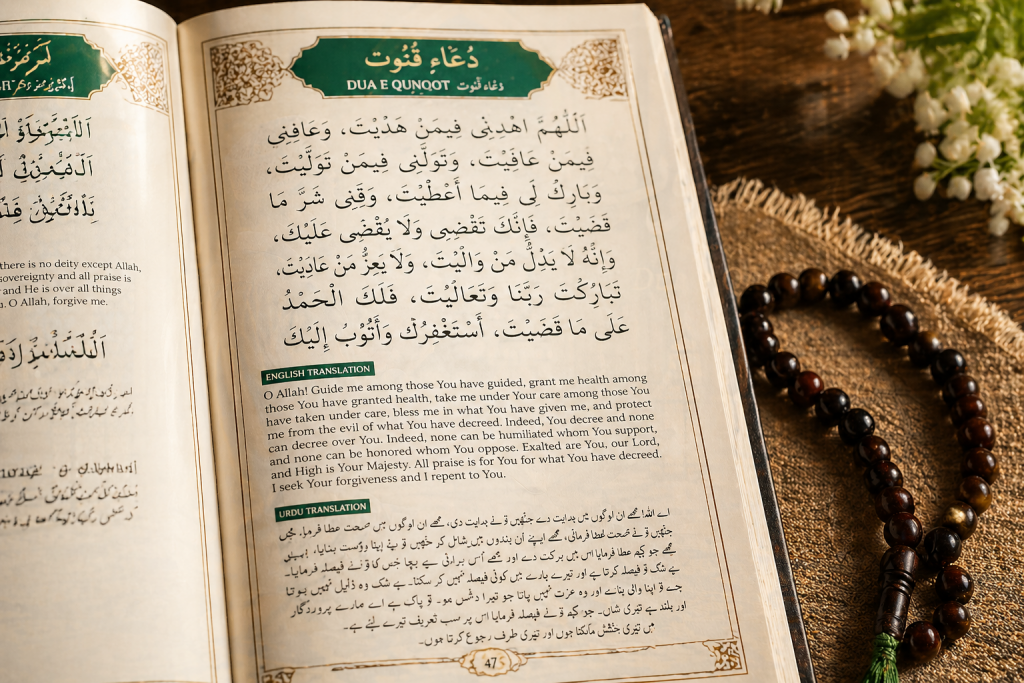
Starts with “Allahumma ihdini feeman hadait…” this duaa travels far through homes and mosques worldwide. Because of its depth, people turn to it when seeking direction, safety, good health, mercy, and escape from darkness. Not merely words stored in memory, but a living map for inner travel. Each line reaches for something real: true pathfinding, peace in body and mind, closeness to the Divine, nourishment that uplifts, shielding from destructive forces woven into fate.
Most experts agree on its role during Witr prayer, even if small details differ between groups. Within the Hanafi school, this practice stands out clearly. Taught early in life by many families, understanding grows slowly over time. Only after quiet moments does insight begin to settle in. Much like holding something valuable without knowing its worth until much later.
These days, more folks are searching online for dua e qunoot in English, in Urdu, with translations, even spelled out in Roman letters. Truth is, it’s not just about saying the words anymore – people want to know what they mean. When you grasp the message behind a prayer, something shifts inside. Reciting it with awareness makes it feel deeper. Meaning alters how it lands within.
Meaning of Qunoot in Islam
Out of ancient Arabic speech grows the word qunoot – tied tight to bowing low in faith. Worship that lingers, hearts bent close to the ground, speaks its truest meaning. Though not carved into scripture line by line, the prayer known as Dua e Qunoot carries that hush of surrender found often in the Qur’an. What matters most sits beneath the words – the quiet ache of yielding, present again and again across divine verses.
A person wanders through night with no way forward, then spots a glow far off. Like that slow blink of warmth in the distance – qunoot sits quietly there. When steps falter and shadows stretch long, it becomes direction found. Before requests rise, before words form – the soul leans into guidance. It asks not later but first: show me how to walk straight. Blessings might pour down, yet miss their mark if paths stay unclear.
From trusted reports, the Prophet Muhammad ﷺ shared special prayers during qunoot. Found in texts like Sunan Abu Dawood and Jami` at-Tirmidhi, one well-known version was passed to Hasan ibn Ali (RA). Because it traces back clearly through time, many still repeat it today just as it came. Its lasting presence across families shows how deeply rooted it has become.
Dependence on Allah shows up in Qunoot. While many chase independence, this prayer quietly builds trust. Facing your boundaries becomes part of the act. Requests go out for help with things beyond reach. Letting go like that? It counts as devotion.
Dua E Qunoot In Witr Prayer
Night ends with Witr, a prayer given weight by the Prophet ﷺ. Though viewed differently across traditions, its importance stands clear through strong emphasis. Some see it as deeply rooted practice. Others assign it firmer status. Right in the middle of this act rises Dua e Qunoot like a gem set quietly into place.
Midnight wraps around moments like a hush. Stillness seeps into corners where noise once lived. Feelings open up without warning. Outside clutter slips away slowly. Prayer whispered at that hour lands heavier. Quiet makes space soul finds its volume.
A cry rises, folding moments of deepest need into a single prayer – life’s heaviest burdens whispered at once.
Dua e Qunoot gathers major needs of life into one supplication:
| Theme | What the Dua Asks For |
| Guidance | Right path and faith |
| Protection | Safety from harm |
| Blessings | Barakah in provisions |
| Mercy | Divine closeness |
| Forgiveness | Protection from evil decrees |
Does Dua e Qunoot Appear in the Quran?
Is Dua e Qunoot actually part of the Quran? Well, here’s the thing – the version people usually say during Witr prayer isn’t pulled straight from scripture. Instead, it finds its roots in reliable traditions linked to the Prophet. Not a surah, not a verse, but still deeply grounded in his guidance.
Surprise shows on faces now and then. Yet some loveliest morning words flow from tradition, not straight scripture lines. Their weight stays unchanged. Actually, prayers shared by the Prophet help followers shape holy ideas into quiet talks with God.
Humility shows up again and again in the Qur’an, along with listening closely to God and asking Him sincerely – this is what qunoot really means. Take how followers are pictured: focused on devotion, heads bowed. Even if that exact prayer isn’t a full chapter, its heartbeat pulses through the scripture.
Picture the Qur’an laying down ideas while the Sunnah shows how they look in real life. Not just theory – someone actually walks it out. Right where those two meet, you find Dua e Qunoot sitting quietly.
Complete Dua e Qunoot in Arabic
اللَّهُمَّ اهْدِنِي فِيمَنْ هَدَيْتَ وَعَافِنِي فِيمَنْ عَافَيْتَ وَتَوَلَّنِي فِيمَنْ تَوَلَّيْتَ وَبَارِكْ لِي فِيمَا أَعْطَيْتَ وَقِنِي شَرَّ مَا قَضَيْتَ فَإِنَّكَ تَقْضِي وَلَا يُقْضَى عَلَيْكَ وَإِنَّهُ لَا يَذِلُّ مَنْ وَالَيْتَ وَلَا يَعِزُّ مَنْ عَادَيْتَ تَبَارَكْتَ رَبَّنَا وَتَعَالَيْتَ
Dua E Qunoot In English Translation
O Allah, guide me among those You have guided.
Grant me wellness among those You have granted wellness.
Take me into Your care among those You have taken into Your care.
Bless me in what You have given me.
Protect me from the evil of what You have decreed.
Surely You decree and none can decree over You.
Whomever You befriend is never humiliated.
Whomever You oppose is never honored.
Blessed are You, our Lord, and Exalted.
Take your time with those words, feeling their weight grow. There’s strength hidden in the pace you give them.
What stands behind these words is trust shaped by longing. Power belongs to one place only, yet reaching toward it comes from weakness. Each phrase carries belief more than request. The heart bends where understanding begins.
Still, more folks look up dua e qunoot in english, its version translated, along with how it sounds when said aloud. Understanding matters now – just repeating words falls short.
Dua E Qunoot In Urdu Translation
اے اللہ! مجھے ان لوگوں میں ہدایت دے جنہیں تو نے ہدایت دی۔ مجھے عافیت دے ان لوگوں میں جنہیں تو نے عافیت دی۔ مجھے اپنا دوست بنا ان لوگوں میں جنہیں تو نے اپنا دوست بنایا۔ جو کچھ تو نے عطا فرمایا اس میں برکت دے۔ اور مجھے ان فیصلوں کے شر سے بچا جو تو نے مقدر کیے۔ بے شک تو فیصلہ کرتا ہے اور تیرے خلاف کوئی فیصلہ نہیں ہوسکتا۔ جس کا تو دوست ہو وہ کبھی ذلیل نہیں ہوتا۔ اور جس سے تو دشمنی کرے وہ عزت نہیں پاسکتا۔ اے ہمارے رب! تو بابرکت اور بلند ہے۔
Most people who follow Islam search for dua e qunoot along with Urdu meanings line by line since reading it in a familiar tongue shifts how it feels. Reciting transforms when words make sense deep inside. Routine fades once connection grows.
When kids see words in Urdu, understanding clicks faster. Once that sense takes root inside, remembering follows without much effort.
How to Read Dua e Qunoot in Witr
People often wonder just which spot works best for saying it aloud.

Step-by-Step in Witr (Hanafi Method)
- Pray third rak‘ah of Witr
- After Surah recitation, say Allahu Akbar and raise hands
- Fold hands again
- Recite Dua e Qunoot
- Go into ruku and continue prayer
Simple – but meaningful.
One school might place it here, another there – yet the core commitment stays unchanged. Such variations in legal thought form a thread within Islamic learning, not conflict.
Start with getting it right, only after that let feeling follow. Without care behind the words, even the sweetest voice carries nothing at all.
What If You Forget Dua e Qunoot?
This query pops up a lot: what to recite if you forget Dua e Qunoot. People wonder about it now and then. Memory slips happen during prayers too. Some pause, unsure what comes next. A different phrase may fill the gap just fine. What matters is staying calm and moving on. Missing one part does not stop the rest. The mind wanders, yet prayer continues anyway.
Should a person still be learning it by heart, experts suggest options like offering sincere prayers from the soul. A few short requests for pardon and kindness can work well during practice. Phrases might include:
Give us good things in this life, yet also what is good in the next. Protect us from the punishment of fire
Some days feel heavier than others. Still, every step forward counts.
One day it becomes part of you, steady and quiet. At first, just a few words echoed each time prayer ends. Like dropping seeds in soft soil without knowing when they’ll rise. Growth happens even when unseen. Repetition makes the shape of memory. Roots form slowly beneath what’s visible.
Line by line, try it slowly. Transliteration helps you follow along. Audio guides your rhythm. After each speaker, echo what was said. Things hard today might feel smooth soon enough.
Benefits and Virtues of Dua e Qunoot
Some wonder why this prayer matters. Its power shows right there in the lines, woven into each phrase.
1. Looking for direction instead
Nothing beats direction in life. Without it, riches might destroy someone instead of helping. Everything looks better when shaped by wise direction.
2. It seeks protection
Hidden dangers exist alongside what we see each day. Speaking this prayer hands those worries to Allah.
3. It invites barakah
Something beyond extra – a gift that carries grace. Difference matters here.
4. It strengthens tawakkul
Each night brings another turn, shaping how the heart leans on Allah.
5. It softens the soul
Prayer spoken again, yet grasped deeply, slowly alters who you are inside.
Peace of heart often shows up where nighttime prayers do. Supplicating regularly through the dark hours – scholars have long tied that rhythm to inner cleansing. Dua e Qunoot slips into those moments quietly, like breath after stillness.
Common Mistakes While Reciting Dua e Qunoot
Most well-meaning folks slip up now and then in tiny ways
| Mistake | Better Approach |
| Rushing through recitation | Recite calmly |
| Memorizing without meaning | Learn translation |
| Wrong pronunciation | Practice tajweed |
| Treating it as ritual only | Make heartfelt dua |
| Panicking if forgotten | Use alternative supplication |
Some people start disputes over small legal details. This prayer means bowing down inside, not trading opinions.
Maybe the worst error happens when someone says “guide me” but pays no attention to direction found beyond prayer. Life after salah needs reshaping by that same plea.
Dua E Qunoot And Qunoot Nazila
Looking up dua e qunoot e nazla makes certain folks question whether it’s identical.
When things go wrong, people sometimes turn to Qunoot Nazila – a prayer shaped by crisis rather than routine. Not quite the same as the usual Witr Dua e Qunoot, it takes form when events shake communities deeply. Through time, it has surfaced during moments too heavy for standard words. Moments that ask for something more, pulled from need instead of habit.
That distinction matters.
Regular Witr Qunoot = daily devotional supplication.
Qunoot Nazila = special supplication in crises.
A reason changes when the situation shifts. Where things happen shapes what they mean.
Memorizing Dua e Qunoot Made Simple
Want a practical way to memorize?
Use this method:
Learn one line daily
Repeat it 20 times after salah
During Witr, follow along with transliterated words instead of just listening
Listen to audio before sleep
Review every Friday
Surprisingly fast is how most folks lock it into memory.
Surprising how often the mind holds what feels deep. If a thought grips inside, speech will echo it soon after.
Conclusion
Not just words said during Witr, Dua e Qunoot carries deeper meaning. Held within it – trust, surrender, hope, direction – all tied together softly. This prayer shows how to seek what truly matters: light on the path, safety through trials, grace in life, nearness to Allah.
Most people look up dua e qunoot in english, stumble on versions in urdu, hunt for one with tarjuma, or focus only on witr dua e qunoot – yet knowing the phrases matters less than letting them shape how you live.
Slowly go through it again when darkness comes. Tonight is the time to speak each word with care.
1. Is Dua e Qunoot compulsory in Witr?
In the Hanafi school it is treated as necessary in Witr, while other schools may differ in rulings and method.
2. Can I read Dua e Qunoot in Roman English while learning?
Yes, transliteration can help beginners memorize until Arabic recitation becomes strong.
3. Is Dua e Qunoot in the Quran?
The common Witr supplication is from Sunnah, not a direct Qur’anic verse.
4. What if I forget Dua e Qunoot during prayer?
If forgotten, follow your school’s fiqh guidance. Many scholars discuss remedies such as sujood al-sahw where applicable.
5. Can children learn Dua e Qunoot with translation?
Absolutely. In fact, learning it with meaning often improves both memorization and love for the dua.