Surah Mulk in English – Translation, Benefits & Miracles (Chapter 67)
What Is Surah Al-Mulk in English?
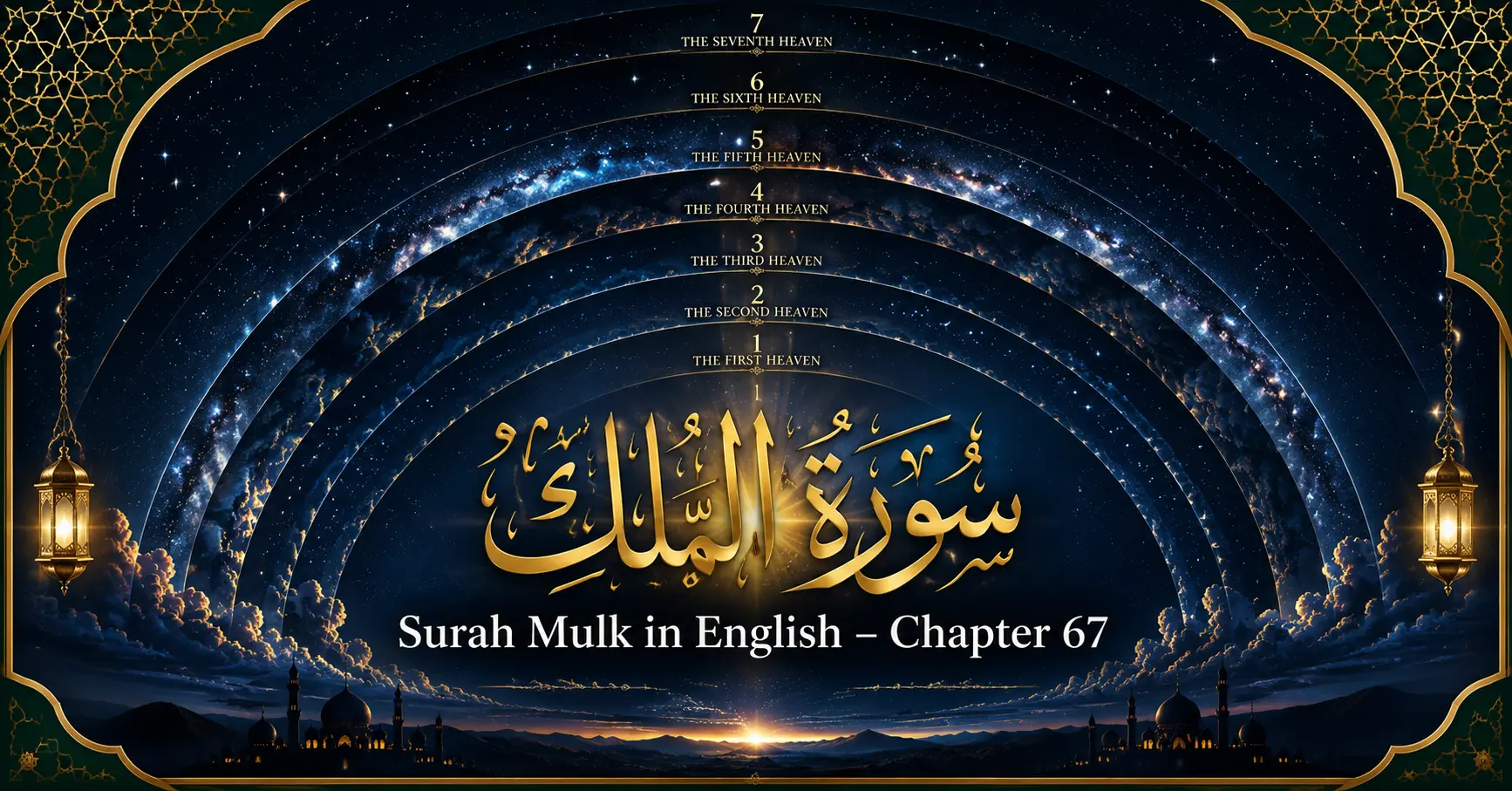
Surah Al-Mulk is the 67th chapter of the Holy Quran. The word Mulk means sovereignty or dominion. The surah opens with a bold declaration that all power and control belongs to Allah alone — a reminder that is as relevant today as it was when it was first revealed.
It is also known by several other names:
- Tabarak — after its opening word, meaning “Blessed is He”
- Al-Waqiyah — “The Protector”
- Al-Munjiyah — “The Savior”
- Al-Mani’ah — “The Defender”
Each name reflects a different dimension of what this surah does for the one who recites it sincerely.
What Is Special About Surah Al-Mulk?
What makes Surah Al-Mulk stand apart from many other chapters is how it combines theology, nature, and protection into one seamless conversation. It speaks about the creation of death and life, the structure of the heavens, the birds in the sky, and the consequences of rejecting truth — all within 30 short verses.
It is not just a surah to recite. It is a surah to reflect on.
The Prophet Muhammad ﷺ said: “There is a surah in the Quran of thirty verses which will intercede for its companion until he is forgiven — Tabarak alladhi biyadihi’l-mulk.” (Tirmidhi, Abu Dawud, Ibn Majah)
What Happens If We Read Surah Mulk?
According to hadith and scholarly tradition, reciting Surah Mulk — especially before sleeping — brings protection in the grave, intercession on the Day of Judgment, and daily spiritual grounding. Ibn Abbas (RA) reported that the Prophet ﷺ described it as a protector and a savior from the punishment of the grave.
Many Muslims recite it every night as a consistent practice. Over time, it becomes less of a routine and more of a conversation with the Divine.
Surah Mulk in English – Full Translation
Below is the complete Surah Mulk in English translation, alongside its Arabic text, so you can read, reflect, and memorize with full understanding.
بِسْمِ اللَّهِ الرَّحْمَٰنِ الرَّحِيمِ
In the name of Allah, the Most Gracious, the Most Merciful.
تَبَارَكَ الَّذِي بِيَدِهِ الْمُلْكُ وَهُوَ عَلَىٰ كُلِّ شَيْءٍ قَدِيرٌ
Blessed is He in whose hand is dominion, and He is over all things competent.
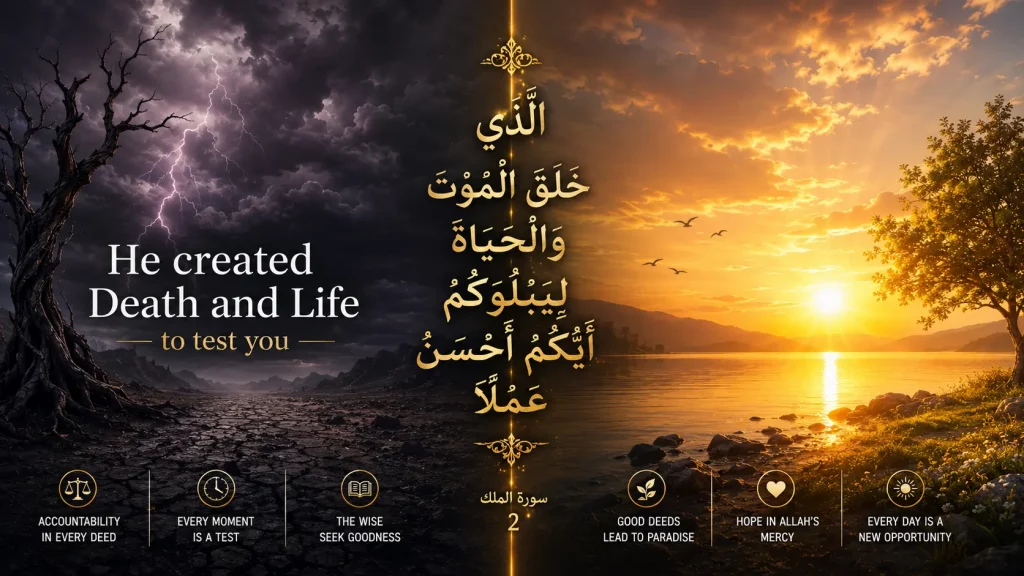
الَّذِي خَلَقَ الْمَوْتَ وَالْحَيَاةَ لِيَبْلُوَكُمْ أَيُّكُمْ أَحْسَنُ عَمَلًا ۚ وَهُوَ الْعَزِيزُ الْغَفُورُ
He who created death and life to test you as to which of you is best in deed — and He is the Exalted in Might, the Forgiving.
الَّذِي خَلَقَ سَبْعَ سَمَاوَاتٍ طِبَاقًا ۖ مَّا تَرَىٰ فِي خَلْقِ الرَّحْمَٰنِ مِن تَفَاوُتٍ ۖ فَارْجِعِ الْبَصَرَ هَلْ تَرَىٰ مِن فُطُورٍ
He who created seven heavens in layers. You do not see in the creation of the Most Merciful any inconsistency. So return your vision — do you see any breaks?
ثُمَّ ارْجِعِ الْبَصَرَ كَرَّتَيْنِ يَنقَلِبْ إِلَيْكَ الْبَصَرُ خَاسِئًا وَهُوَ حَسِيرٌ
Then return your vision twice again. Your vision will return to you humbled while it is fatigued.
وَلَقَدْ زَيَّنَّا السَّمَاءَ الدُّنْيَا بِمَصَابِيحَ وَجَعَلْنَاهَا رُجُومًا لِّلشَّيَاطِينِ ۖ وَأَعْتَدْنَا لَهُمْ عَذَابَ السَّعِيرِ
And We have certainly beautified the nearest heaven with stars and have made them what is thrown at the devils and have prepared for them the punishment of the Blaze.
وَلِلَّذِينَ كَفَرُوا بِرَبِّهِمْ عَذَابُ جَهَنَّمَ ۖ وَبِئْسَ الْمَصِيرُ
And for those who disbelieved in their Lord is the punishment of Hell, and wretched is the destination.
إِذَا أُلْقُوا فِيهَا سَمِعُوا لَهَا شَهِيقًا وَهِيَ تَفُورُ
When they are thrown into it, they hear from it a rasping sound while it boils up.
تَكَادُ تَمَيَّزُ مِنَ الْغَيْظِ ۖ كُلَّمَا أُلْقِيَ فِيهَا فَوْجٌ سَأَلَهُمْ خَزَنَتُهَا أَلَمْ يَأْتِكُمْ نَذِيرٌ
It almost bursts with rage. Every time a company is thrown into it, its keepers ask them: “Did there not come to you a warner?”
قَالُوا بَلَىٰ قَدْ جَاءَنَا نَذِيرٌ فَكَذَّبْنَا وَقُلْنَا مَا نَزَّلَ اللَّهُ مِن شَيْءٍ إِنْ أَنتُمْ إِلَّا فِي ضَلَالٍ كَبِيرٍ
They will say: “Yes, a warner had come to us, but we denied and said: Allah has not sent down anything. You are not but in great error.”
وَقَالُوا لَوْ كُنَّا نَسْمَعُ أَوْ نَعْقِلُ مَا كُنَّا فِي أَصْحَابِ السَّعِيرِ
And they will say: “If only we had been listening or reasoning, we would not be among the companions of the Blaze.”
فَاعْتَرَفُوا بِذَنبِهِمْ فَسُحْقًا لِّأَصْحَابِ السَّعِيرِ
And they will admit their sin, so away with the companions of the Blaze.
إِنَّ الَّذِينَ يَخْشَوْنَ رَبَّهُم بِالْغَيْبِ لَهُم مَّغْفِرَةٌ وَأَجْرٌ كَبِيرٌ
Indeed, those who fear their Lord unseen will have forgiveness and great reward.
وَأَسِرُّوا قَوْلَكُمْ أَوِ اجْهَرُوا بِهِ ۖ إِنَّهُ عَلِيمٌ بِذَاتِ الصُّدُورِ
And conceal your speech or publicize it — indeed, He is Knowing of that within the breasts.
أَلَا يَعْلَمُ مَنْ خَلَقَ وَهُوَ اللَّطِيفُ الْخَبِيرُ
Does He who created not know, while He is the Subtle, the Acquainted?
هُوَ الَّذِي جَعَلَ لَكُمُ الْأَرْضَ ذَلُولًا فَامْشُوا فِي مَنَاكِبِهَا وَكُلُوا مِن رِّزْقِهِ ۖ وَإِلَيْهِ النُّشُورُ
It is He who made the earth tame for you — so walk among its slopes and eat of His provision and to Him is the resurrection.
أَأَمِنتُم مَّن فِي السَّمَاءِ أَن يَخْسِفَ بِكُمُ الْأَرْضَ فَإِذَا هِيَ تَمُورُ
Do you feel secure that He who is above the heaven would not cause the earth to swallow you, and suddenly it would sway?
أَمْ أَمِنتُم مَّن فِي السَّمَاءِ أَن يُرْسِلَ عَلَيْكُمْ حَاصِبًا ۖ فَسَتَعْلَمُونَ كَيْفَ نَذِيرِ
Or do you feel secure that He who is above the heaven would not send against you a storm of stones? Then you would know how was My warning.
وَلَقَدْ كَذَّبَ الَّذِينَ مِن قَبْلِهِمْ فَكَيْفَ كَانَ نَكِيرِ
And already those before them had denied, and how terrible was My reproach.
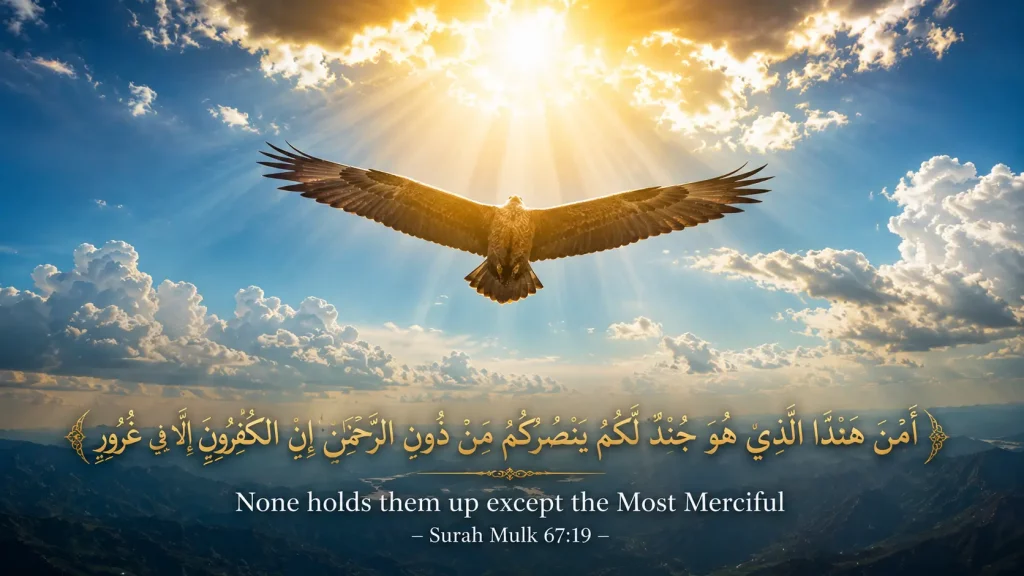
أَوَلَمْ يَرَوْا إِلَى الطَّيْرِ فَوْقَهُمْ صَافَّاتٍ وَيَقْبِضْنَ ۚ مَا يُمْسِكُهُنَّ إِلَّا الرَّحْمَٰنُ ۚ إِنَّهُ بِكُلِّ شَيْءٍ بَصِيرٌ
Do they not see the birds above them with wings outspread and sometimes folded in? None holds them up except the Most Merciful. Indeed He is, of all things, Seeing.
أَمَّنْ هَٰذَا الَّذِي هُوَ جُندٌ لَّكُمْ يَنصُرُكُم مِّن دُونِ الرَّحْمَٰنِ ۚ إِنِ الْكَافِرُونَ إِلَّا فِي غُرُورٍ
Or who is it that could be an army for you to aid you other than the Most Merciful? The disbelievers are not but in delusion.
أَمَّنْ هَٰذَا الَّذِي يَرْزُقُكُمْ إِنْ أَمْسَكَ رِزْقَهُ ۚ بَل لَّجُّوا فِي عُتُوٍّ وَنُفُورٍ
Or who is it that could provide for you if He withheld His provision? But they persist in pride and evasion.
أَفَمَن يَمْشِي مُكِبًّا عَلَىٰ وَجْهِهِ أَهْدَىٰ أَمَّن يَمْشِي سَوِيًّا عَلَىٰ صِرَاطٍ مُّسْتَقِيمٍ
Then is one who walks fallen on his face better guided or one who walks erect on a straight path?
قُلْ هُوَ الَّذِي أَنشَأَكُمْ وَجَعَلَ لَكُمُ السَّمْعَ وَالْأَبْصَارَ وَالْأَفْئِدَةَ ۖ قَلِيلًا مَّا تَشْكُرُونَ
Say: It is He who has produced you and made for you hearing and sight and hearts; little are you grateful.
قُلْ هُوَ الَّذِي ذَرَأَكُمْ فِي الْأَرْضِ وَإِلَيْهِ تُحْشَرُونَ
Say: It is He who has multiplied you throughout the earth, and to Him you will be gathered.
وَيَقُولُونَ مَتَىٰ هَٰذَا الْوَعْدُ إِن كُنتُمْ صَادِقِينَ
And they say: “When is this promise, if you should be truthful?”
قُلْ إِنَّمَا الْعِلْمُ عِندَ اللَّهِ وَإِنَّمَا أَنَا نَذِيرٌ مُّبِينٌ
Say: “The knowledge is only with Allah, and I am only a clear warner.”
فَلَمَّا رَأَوْهُ زُلْفَةً سِيئَتْ وُجُوهُ الَّذِينَ كَفَرُوا وَقِيلَ هَٰذَا الَّذِي كُنتُم بِهِ تَدَّعُونَ
And when they see it approaching, the faces of those who disbelieved will be distressed, and it will be said: “This is that which you used to call for.”
قُلْ أَرَأَيْتُمْ إِنْ أَهْلَكَنِيَ اللَّهُ وَمَن مَّعِيَ أَوْ رَحِمَنَا فَمَن يُجِيرُ الْكَافِرِينَ مِنْ عَذَابِ أَلِيمٍ
Say: “Have you considered: whether Allah should cause my death and those with me or have mercy upon us, who can protect the disbelievers from a painful punishment?”
قُلْ هُوَ الرَّحْمَٰنُ آمَنَّا بِهِ وَعَلَيْهِ تَوَكَّلْنَا ۖ فَسَتَعْلَمُونَ مَنْ هُوَ فِي ضَلَالٍ مُّبِينٍ Say:
“He is the Most Merciful; we have believed in Him, and upon Him we have relied. And you will know who it is that is in clear error.”
قُلْ أَرَأَيْتُمْ إِنْ أَصْبَحَ مَاؤُكُمْ غَوْرًا فَمَن يَأْتِيكُم بِمَاءٍ مَّعِينٍ
Say: “Have you considered: if your water was to become sunken into the earth, then who could bring you flowing water?”
Why Did Allah Create Death?
One of the most thought-provoking verses in this surah comes right at the beginning. Verse 2 says:
“He who created death and life to test you as to which of you is best in deed.”
Notice something interesting here. Death is mentioned before life. Scholars have reflected deeply on this sequence. One perspective is that death is the original state — life is the gift that interrupts it, and death is the return.
Why Is Death Scary in Islam?
Islam does not ask you to pretend death is not frightening. It acknowledges the natural human fear of the unknown. But it redirects that fear productively. In Islam, awareness of death is not meant to paralyze it is meant to purify. The Prophet ﷺ encouraged his companions to remember death often, not to become depressed, but to remain focused on what truly matters.
What Happens 7 Days After Death in Islam?
While Quran and hadith describe the state of the soul in the grave (barzakh), there is no specific widespread narration about “7 days after death” as a defined spiritual milestone. What is established is that the soul enters barzakh immediately after death, where it experiences either ease or difficulty based on its deeds. Reciting Quran, making dua, and giving sadaqah on behalf of the deceased is encouraged — and many Muslims do this in the days and weeks following a death.
Why Did Allah Create Us to Suffer?
This is one of the most sincere questions human beings ask. The Quran’s answer in Surah Al-Mulk is that life is a test — not a punishment. The Arabic word used is liyabluwakum, meaning “to try you” or “to test you.” Difficulty is not the goal; it is the medium through which character, patience, and trust in Allah are built. The believer’s response to hardship — staying patient, remaining grateful, continuing to do good — is itself the answer to this question.
What Does D Mean in Islam?
If you are searching what the “D” or specific terms in Islamic vocabulary mean, Islam uses Arabic terms to describe spiritual concepts. A common search in this area relates to terms like deen (meaning religion or way of life), dua (supplication), or dhikr (remembrance of Allah). Each carries layers of meaning that English translations can only approximate.
Why Do Muslims Not Use Coffins?
This relates to Islamic burial practices rooted in simplicity and humility before Allah. The Islamic tradition prefers direct earth burial — the deceased is wrapped in a white shroud (kafan) and lowered into the ground without a coffin where possible. The reasoning is that the body was created from earth and returns to it, as a reminder of human humility and equality before Allah.
Why Is Surah Mulk So Powerful?
People often ask: which surah is very powerful? While every chapter of the Quran carries divine weight, Surah Al-Mulk holds a unique place for several reasons.
What Are the Miracles in Surah Mulk?
Surah Mulk is filled with profound signs for those who reflect:
1. The Creation of Death Before Life Modern philosophy and science have long grappled with the meaning of death. The Quran frames it not as an accident but as a purposeful creation — designed to give life meaning through accountability.
2. The Flawless Heavens Verses 3 and 4 invite the reader to look at the sky and find a crack, an inconsistency, a flaw. This challenge — made over 1,400 years ago — still stands unanswered. Modern astronomy has only deepened our awe at the precision of the universe.
3. Birds in Flight Verse 19 draws attention to birds flying with wings spread, held up by the will of the Most Merciful. Modern aerodynamics has explained how birds fly — but the deeper question of why anything holds together at all points back to the same source.
4. Intercession After Death The surah’s reported ability to intercede for its reciter in the grave is one of the most widely narrated spiritual properties of any chapter in the Quran. This is not magic — it is the mercy of Allah responding to sincere engagement with His words.
Why Do We Read Surah Mulk Every Night?
The consistent practice of reciting Surah Mulk before sleep is rooted in a hadith of the Prophet ﷺ who made it a personal habit and encouraged others to do the same. The spiritual logic is simple: the night carries the closest proximity to death in waking life — sleep is sometimes called the minor death. Reading Surah Mulk before that transition is a way of ending the day in remembrance, reflection, and reliance on Allah.
What Happens If You Recite Surah Mulk Daily?
Daily recitation of Surah Mulk builds more than spiritual protection. It builds familiarity — with the words of Allah, with the themes of accountability and trust, and with a nightly ritual that anchors your day. Over time, the meanings sink deeper. Verses that once passed over you begin to land with weight. That is the nature of Quranic recitation: the more you return, the more you receive.
How Many Times Should I Recite Surah Mulk?
There is no prescribed number of repetitions mentioned in authentic hadith specifically for Surah Mulk. The established practice is to recite it once before sleeping. Some scholars suggest reciting it in the morning as well for daily protection. What matters more than number is sincerity and consistency.
What Is Surah Al-Mulk Ayat 6 to 8?
Ayat 6 to 8 of Surah Al-Mulk are among the most vivid and sobering passages in the Quran. They describe the punishment of Hell for those who rejected faith.
Ayat 6: Those who disbelieve in their Lord will face the punishment of Hell — a wretched destination.
Ayat 7: When they are thrown into it, they will hear it roaring and boiling like a raging fire.
Ayat 8: It almost bursts with rage. Every time a group is thrown in, the keepers of Hell will ask them: “Did a warner not come to you?”
These verses carry a deeply personal message. The question — “Did a warner not come to you?” — assumes the answer is yes. It always was yes. The Quran itself, the Prophet ﷺ, one’s own conscience — all were warnings. The tragedy described here is not ignorance. It is willful turning away.
What Is the Quran Chapter 67 Verse 8?
Verse 8 specifically captures the moment of accountability in the afterlife — where Hell itself seems to seethe with anger, and its keepers question those who are cast into it. It is a verse that should inspire urgency, not despair. Because the conversation is still happening now. The warner is still speaking. The choice is still open.
What Is the Main Message of Surah Mulk?
The main message of Surah Al-Mulk can be understood in three layers:
- Sovereignty — All power belongs to Allah. Nothing in creation operates outside His will.
- Accountability — Life is a test. Every action, every choice, every moment carries weight.
- Protection — Those who fear Allah sincerely, who believe and trust in Him, will not be abandoned — in this life or beyond it.
These three themes weave through every verse of the surah, returning again and again in different forms until they settle into the heart.
Is It Good to Recite Surah Mulk Daily?
Yes — and not just because of the reported spiritual benefits. Daily recitation keeps the heart connected to these themes. It is hard to stay arrogant when you regularly recite a surah about Allah’s absolute sovereignty. It is hard to stay fearless about the wrong things when you regularly reflect on accountability. The surah recalibrates you, one night at a time.
Which 3 Surahs to Recite at Night?
A widely recommended night routine from the Sunnah includes:
- Surah Al-Mulk (Chapter 67) — for protection and intercession
- Surah As-Sajdah (Chapter 32) — often recited alongside Al-Mulk
- Ayatul Kursi (2:255) — for comprehensive protection before sleep
Some scholars also mention the last two verses of Surah Al-Baqarah as part of an evening practice.
Surah Mulk Benefits
The benefits of Surah Mulk are not limited to the afterlife. They ripple through daily spiritual experience:
| Benefit | Description |
| Protection from Grave Punishment | Reported to intercede for the reciter in the grave |
| Nightly Spiritual Anchor | Creates a consistent end-of-day connection with Allah |
| Strengthens Tawakkul | Regular reflection on Allah’s sovereignty builds reliance on Him |
| Clarity of Purpose | The surah reminds you daily that life is a test — which simplifies decision-making |
| Deepens Gratitude | Verse 23 (hearing, sight, hearts) is a powerful reminder of gifts often overlooked |
1. What is Surah Al-Mulk also known as?
Surah Al-Mulk is also known as Tabarak (after its opening word), Al-Waqiyah (The Protector), Al-Munjiyah (The Savior), and Al-Mani’ah (The Defender). Each name reflects a different spiritual quality of this chapter.
2. What happens if we read Surah Mulk every night before sleeping?
According to hadith narrated by scholars including Tirmidhi and Abu Dawud, the Prophet ﷺ described Surah Mulk as a surah that intercedes for its reciter and protects from the punishment of the grave. Regular nighttime recitation is a well-established Sunnah practice.
3. Why did Allah create death and life — what does Surah Mulk say?
Surah Mulk verse 2 states that Allah created death and life to test which of us is best in deed. Death is not an accident or a tragedy — it is a purposeful creation designed to give life meaning, urgency, and direction toward Allah.
4. What is the main message of Surah Al-Mulk?
The main message is threefold: Allah holds absolute sovereignty over all creation; every human being is accountable for their choices; and those who sincerely believe and fear Allah will receive His protection and forgiveness — in this world and the next.
5. How many verses does Surah Mulk have and where is it in the Quran?
Surah Al-Mulk has 30 verses and is the 67th chapter of the Quran. It belongs to the 29th Juz (para) and was revealed in Makkah, making it a Makki surah.