Takbeerat e Tashreeq – Eid ul Adha Takbeerat From 9 to 12 Zil Hajj
The days of Dhul Hijjah carry a spiritual atmosphere unlike any other time of the year. As pilgrims gather in Makkah for Hajj and millions of Muslims prepare for Eid ul Adha, the air fills with remembrance of Allah. One of the most beautiful acts of worship during these blessed days is the recitation of Takbeerat e Tashreeq. These powerful words glorify Allah and remind believers of faith, sacrifice, gratitude, and unity.
From the 9th to the 12th of Zil Hajj, Muslims recite these Takbeerat after every obligatory prayer. Whether in large mosques, quiet homes, workplaces, or while traveling, the Takbeer echoes through Muslim communities worldwide. It creates a spiritual rhythm during Eid ul Adha, almost like a heartbeat connecting millions of believers together in remembrance of Allah.
The Takbeerat are simple to memorize, yet their meaning carries enormous depth. Every phrase magnifies Allah’s greatness and acknowledges that all praise belongs to Him alone. During Eid celebrations filled with food, gatherings, and Qurbani, these Takbeerat gently pull the heart back toward worship and humility. They remind Muslims that behind every celebration lies devotion to Allah.
Islamic scholars emphasize the importance of remembering Allah abundantly during the days of Tashreeq. These are not ordinary days. According to authentic narrations, they are among the most beloved days to Allah for worship and remembrance. Muslims increase their prayers, charity, fasting, and recitation of Takbeer during this sacred period.
Understanding Takbeerat e Tashreeq
Meaning of Takbeer in Islam
The word “Takbeer” comes from the Arabic phrase Allahu Akbar, meaning “Allah is the Greatest.” These words are among the most repeated phrases in Islam. Muslims recite them in salah, during Hajj, on Eid, and in daily life. Takbeer is more than speech; it is a declaration that Allah is greater than fears, wealth, status, distractions, and worldly problems.
Think of Takbeer as a spiritual reset button. Life often pulls people into stress, competition, and endless distractions. Human beings become overwhelmed by bills, social pressure, work demands, and emotional struggles. Saying Allahu Akbar reminds believers that Allah’s power is above everything else. It shifts focus away from temporary worries toward eternal truth.
Takbeerat e Tashreeq specifically emphasize glorifying Allah during the sacred days of Eid ul Adha. These are days connected to Prophet Ibrahim (AS), sacrifice, obedience, and devotion. By repeating these Takbeerat after every obligatory prayer, Muslims continuously renew their faith throughout the day.
The emotional beauty of Takbeer becomes even more powerful during congregational prayers. Hearing an entire mosque recite the Takbeer together creates unity and spiritual energy. Rich and poor, young and old, travelers and residents all stand equal before Allah, praising Him together. It becomes a reminder that Islam unites hearts beyond nationality, language, or culture.
Why These Takbeerat Are Important
Takbeerat e Tashreeq are not random phrases recited during Eid for tradition alone. They are deeply connected to Quranic teachings and prophetic practices. Allah commands believers in the Quran to remember Him during the “appointed days,” which scholars identify as the days of Tashreeq.
These Takbeerat help Muslims remain spiritually grounded during celebration. Eid ul Adha naturally involves gatherings, food, shopping, and Qurbani preparations. Without remembrance of Allah, celebrations can slowly become purely cultural events. Takbeer protects the spiritual essence of Eid by keeping Allah at the center.
There is also psychological wisdom behind repeated remembrance. Modern research on mindfulness and gratitude suggests that repeated spiritual phrases calm the mind and reduce stress. Islamic worship achieved this spiritual mindfulness centuries ago through dhikr and Takbeer. When believers repeatedly glorify Allah, their hearts become calmer and more connected spiritually.
The Takbeerat also symbolize unity among Muslims worldwide. Imagine millions of people in different countries reciting the exact same words during the same blessed days. That shared remembrance creates a global spiritual connection unlike anything else.
Takbeerat e Tashreeq in Arabic
Arabic Text
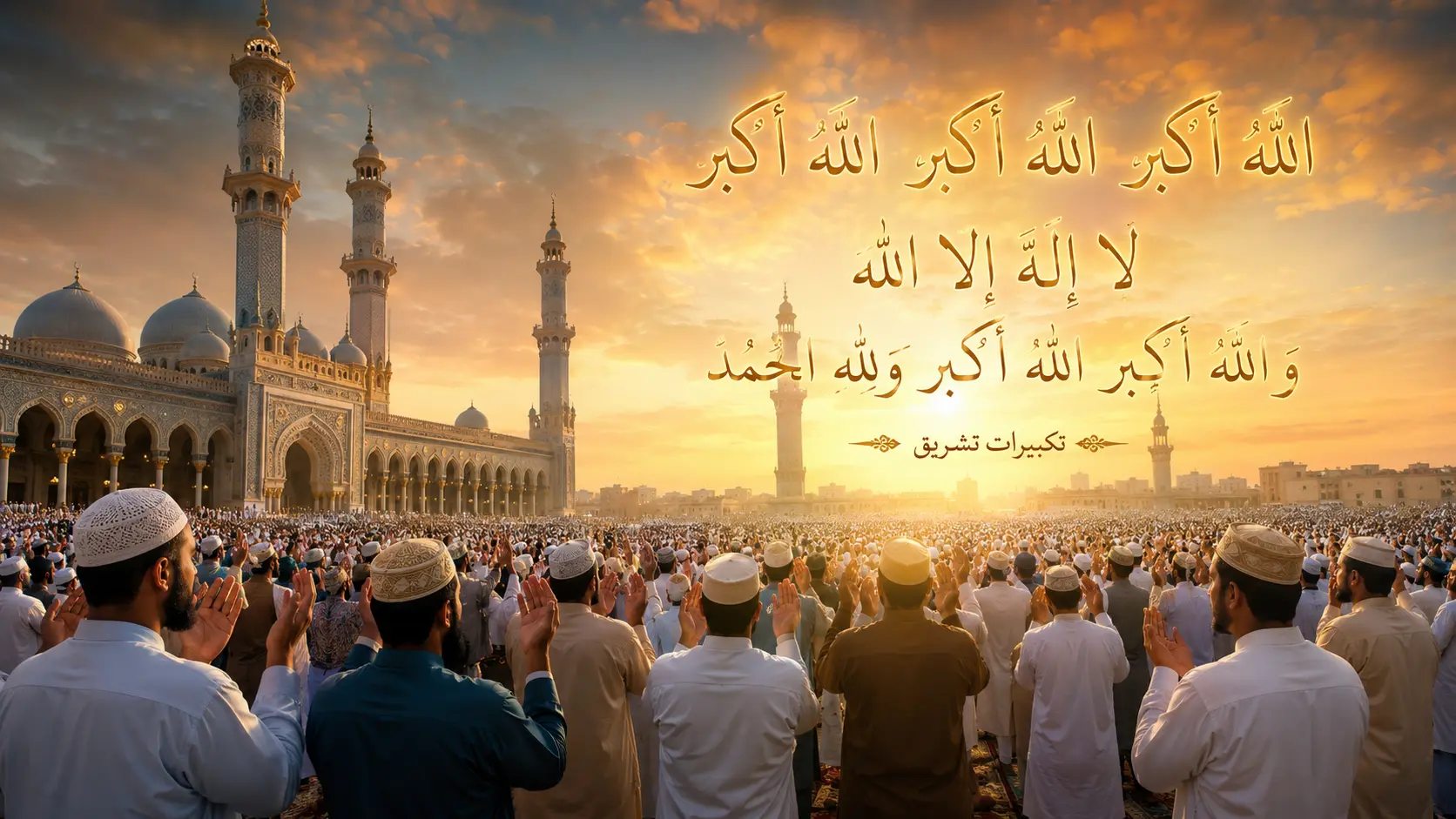
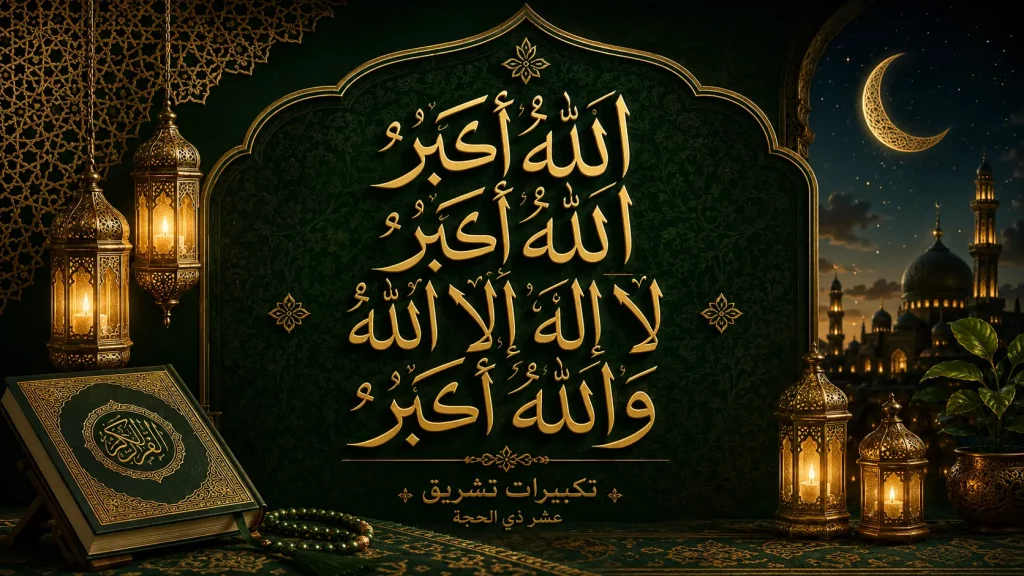
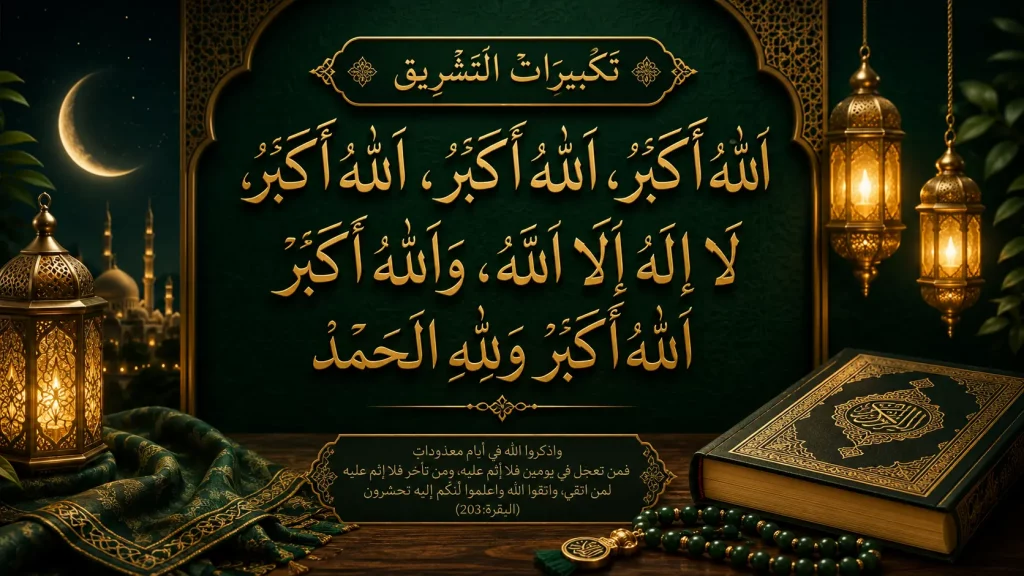
اللَّهُ أَكْبَرُ، اللَّهُ أَكْبَرُ، لَا إِلٰهَ إِلَّا اللَّهُ وَاللَّهُ أَكْبَرُ، اللَّهُ أَكْبَرُ وَلِلَّهِ الْحَمْدُ
Transliteration
Allahu Akbar, Allahu Akbar, La ilaha illallahu Wallahu Akbar, Allahu Akbar wa lillahil hamd.
English Translation
“Allah is the Greatest, Allah is the Greatest. There is no god except Allah, and Allah is the Greatest. Allah is the Greatest, and all praise belongs to Allah.”
The structure of this Takbeer is incredibly beautiful. It begins and ends with glorifying Allah, while the middle affirms pure monotheism. The Takbeer combines praise, worship, gratitude, and belief into one powerful statement.
Every phrase carries deep meaning. Saying La ilaha illallah reminds Muslims that nothing deserves worship except Allah. The repeated declaration of Allah’s greatness strengthens faith and humility. Ending with praise acknowledges that every blessing ultimately comes from Allah alone.
Many Muslims teach children this Takbeer from a young age because it becomes a memorable part of Eid traditions. The words echo in homes, mosques, marketplaces, and streets during Eid ul Adha, creating a deeply spiritual environment.
When to Read Takbeerat e Tashreeq
Start Time on 9th Zil Hajj
Takbeerat e Tashreeq begin after Fajr prayer on the 9th of Zil Hajj, the Day of Arafah. This day itself is among the most sacred days in Islam. Pilgrims stand on the plains of Arafah seeking Allah’s forgiveness, while Muslims around the world engage in fasting, dua, and remembrance.
Starting Takbeer from Fajr prayer creates spiritual momentum leading into Eid ul Adha. From the very first prayer of the day, believers begin glorifying Allah repeatedly. The repetition builds an atmosphere of worship throughout Dhul Hijjah.
Many Muslims place reminders on phones or mosque notice boards because it is easy to forget during busy schedules. Yet once the Takbeer becomes a habit, it naturally flows after every prayer.
End Time on 12th Zil Hajj
The Takbeerat continue until after Asr prayer on the 12th of Zil Hajj according to many scholars. This means Muslims recite Takbeer after every obligatory prayer for four sacred days.
| Day | Takbeerat Timing |
| 9th Zil Hajj | After Fajr onwards |
| 10th Zil Hajj | Eid ul Adha Day |
| 11th Zil Hajj | Full day after prayers |
| 12th Zil Hajj | Until Asr prayer |
These repeated reminders prevent believers from becoming spiritually distracted during Eid celebrations. Just as clocks mark time physically, Takbeer marks time spiritually during Dhul Hijjah.
After Which Prayers Should It Be Read
Takbeerat e Tashreeq are recited after every obligatory fard prayer. This includes:
- Fajr
- Dhuhr
- Asr
- Maghrib
- Isha
Some scholars recommend reciting immediately after salah before speaking or changing position. This helps preserve focus and consistency.
Importance of Takbeerat During Eid ul Adha
Connection With Hajj and Qurbani
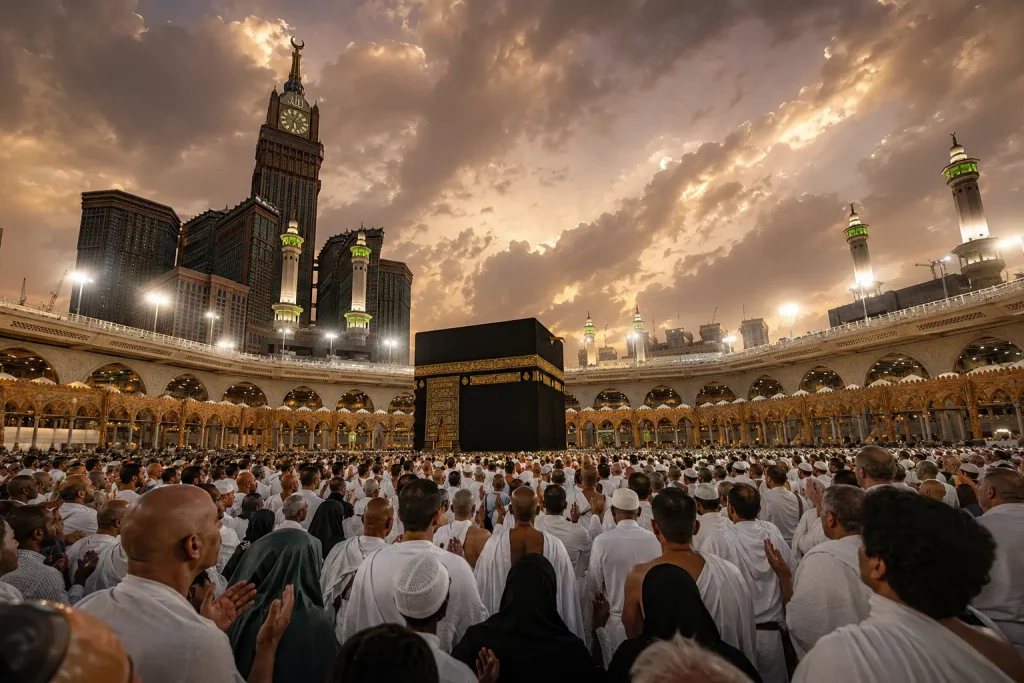
Eid ul Adha revolves around sacrifice, obedience, and submission to Allah. Pilgrims performing Hajj recite Takbeer frequently while completing rituals connected to Prophet Ibrahim (AS). Muslims outside Makkah participate spiritually through Takbeerat e Tashreeq and Qurbani.
The Takbeer reminds believers about Ibrahim’s incredible faith. Imagine preparing to sacrifice what you love most purely because Allah commanded it. That level of trust is difficult even to imagine. Takbeerat keep that spirit alive every Eid.
Qurbani itself becomes more meaningful when connected with remembrance of Allah. Without spirituality, sacrifice could become mere tradition. Takbeer restores sincerity and worship to the center of Eid practices.
Spiritual Benefits of Remembering Allah
Islam teaches that hearts find peace through remembrance of Allah. Takbeer strengthens spiritual awareness throughout the day. Instead of limiting worship to formal prayers alone, Muslims continue remembering Allah afterward.
There is also emotional beauty in hearing Takbeer collectively. Mosques filled with synchronized Takbeer create feelings of unity and peace. During times when the Muslim world often feels divided politically or socially, these moments of shared worship remind believers of their common faith.
Many people also describe feeling emotionally uplifted during Dhul Hijjah because repeated Takbeer creates a spiritual atmosphere difficult to explain in words. It feels almost like the soul breathing more deeply.
Rules of Takbeerat e Tashreeq
Rulings for Men and Women
Takbeerat e Tashreeq apply to both men and women. Men often recite aloud in mosques, while women may recite softly at home or privately. Islamic scholars encourage everyone to participate in remembrance during these sacred days.
There are slight differences among schools of thought regarding whether Takbeer is wajib or strongly recommended. Yet all scholars agree that it is a highly virtuous act connected to Eid ul Adha.
The purpose is not rigid formality but abundant remembrance of Allah. Even children are encouraged to learn and recite the Takbeer so families can worship together.
Loud vs Soft Recitation
In many Muslim countries, Takbeer is recited loudly after congregational prayers, creating a powerful spiritual environment. In other places, Muslims recite individually and softly.
| Recitation Style | Common Practice |
| Loud Recitation | Mosques and congregational settings |
| Soft Recitation | Personal prayer or home settings |
Both methods are practiced among Muslims globally depending on local tradition and scholarly guidance.
Common Mistakes Muslims Make
Forgetting the Timing
One of the most common mistakes is forgetting when Takbeerat begin and end. Some people start only on Eid day, while others stop too early.
Because Eid preparations become busy, believers sometimes focus more on shopping, cooking, and social events than spiritual worship. Setting reminders or following mosque announcements helps maintain consistency.
Incorrect Recitation
Another common issue is mixing up words or shortening the Takbeer incorrectly. Since pronunciation matters, learning the authentic wording carefully is important.
Parents and teachers play a major role here. Teaching children proper pronunciation early helps preserve correct recitation for future generations.
Virtues of Dhul Hijjah and Days of Tashreeq
Why These Days Are Blessed
The first ten days of Dhul Hijjah are among the greatest days in Islam. The Prophet Muhammad ﷺ said that righteous deeds during these days are especially beloved to Allah.
The days of Tashreeq continue this atmosphere of worship and gratitude. Muslims perform Qurbani, remember Allah frequently, and celebrate Eid with family and community.
These days combine joy and spirituality beautifully. Islam does not separate worship from celebration. Instead, Eid transforms celebration itself into worship through gratitude, Takbeer, charity, and remembrance.
How Families Can Practice Takbeerat Together
Teaching Children the Takbeer
Families can make Takbeerat e Tashreeq a memorable Eid tradition. Parents may recite together after salah, helping children memorize naturally through repetition.
Visual Islamic decorations, Eid charts, or Arabic calligraphy also help children connect emotionally with the Takbeer. Some families create fun learning routines where kids lead Takbeer after prayer.
These moments become childhood memories attached to Eid ul Adha. Long after gifts and food are forgotten, spiritual traditions often remain deeply rooted in the heart.
Takbeerat e Tashreeq Around the Muslim World
Different Cultural Traditions
Muslims across different cultures celebrate Takbeerat uniquely. In some countries, mosques broadcast Takbeer through loudspeakers. In others, families gather after prayer for collective recitation.
Despite cultural differences, the words remain the same. That shared remembrance creates unity across continents and languages.
Whether in Pakistan, Saudi Arabia, Turkey, Indonesia, or Africa, Muslims glorify Allah together during Dhul Hijjah. The Takbeer becomes a spiritual bridge connecting the global Muslim Ummah.
Conclusion
Takbeerat e Tashreeq are among the most spiritually uplifting practices during Eid ul Adha and the blessed days of Dhul Hijjah. These powerful words remind Muslims that Allah is greater than worldly distractions, celebrations, fears, and desires.
From the 9th to the 12th of Zil Hajj, believers recite Takbeer after every obligatory prayer, filling homes and mosques with remembrance of Allah. The Takbeerat strengthen faith, revive the Sunnah, and connect Muslims worldwide through shared worship.
In the middle of busy Eid preparations and celebrations, these words act like spiritual anchors. They pull hearts back toward gratitude, humility, and devotion. Even though the Takbeer is short, its impact on the soul can be immense when recited sincerely and consistently.
What is Takbeerat e Tashreeq?
Takbeerat e Tashreeq are special words of remembrance recited after obligatory prayers from 9th to 12th Zil Hajj during Eid ul Adha.
When do Takbeerat e Tashreeq start?
They begin after Fajr prayer on the 9th of Zil Hajj.
When do Takbeerat e Tashreeq end?
They end after Asr prayer on the 12th of Zil Hajj according to many scholars.
Can women recite Takbeerat e Tashreeq?
Yes, women are also encouraged to recite the Takbeer after obligatory prayers.
Why are Takbeerat important during Eid ul Adha?
They glorify Allah, strengthen faith, revive Sunnah practices, and connect Muslims spiritually during the blessed days of Dhul Hijjah.F