Surah Hashr Last 3 Verses: Translation, Benefits,and Powerful Virtues
Introduction to Surah Hashr Last 3 Verses
The Surah Hashr last 3 verses are among the most beloved and often-recited passages in the Qur’an. These final āyāt of Surah Al-Hashr are treasured not only for their breathtaking description of Allah’s beautiful names but also for the spiritual comfort they bring. Many Muslims include these verses in their daily adhkār because they carry meanings that nourish the soul, strengthen faith, and remind the heart where true peace comes from. There is something deeply moving about verses that begin with Allah’s knowledge of the unseen and end with creation glorifying Him.
These verses feel like a doorway. You recite them with your tongue, but they open in the heart. They teach tawḥīd, inspire awe, and pull a believer closer to understanding the Majesty of Allah. It is no surprise people search for the benefits of last 3 verses of Surah Hashr, their transliteration, meanings, and virtues. These are not ordinary verses people memorize and move on from; they are verses many return to again and again, like returning to a spring that never runs dry.
What Are the Last 3 Ayat of Surah Al Hashr?
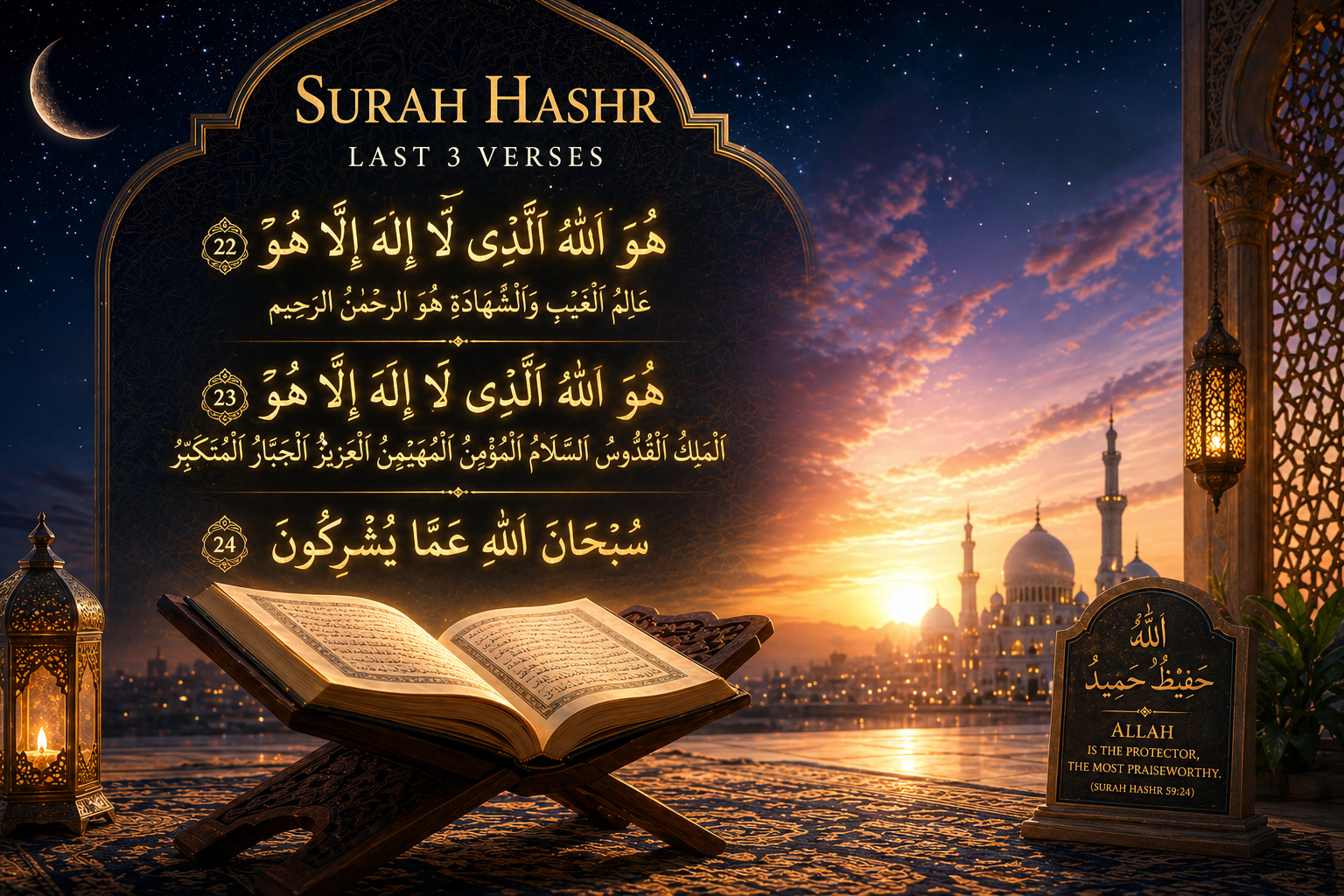
The Surah Hashr last 3 verses are verses 22, 23, and 24 of Surah Al-Hashr. They are widely known because they mention many of the Beautiful Names of Allah (Asma ul Husna) and summarize profound truths about His knowledge, mercy, authority, perfection, and creative power.
These verses begin:
He is Allah, besides whom there is no deity, Knower of the unseen and the seen…
Then they continue with majestic names such as:
- Ar-Rahman (The Most Merciful)
- Ar-Raheem (The Especially Merciful)
- Al-Malik (The King)
- Al-Quddus (The Holy)
- As-Salam (The Source of Peace)
- Al-Mu’min (The Granter of Security)
- Al-Aziz (The Almighty)
Each name carries layers of meaning. Reading them feels like watching light pass through a prism one source, many beautiful reflections.
Surah Al Hashr Last 3 Verses in Arabic
Verse 22 (59:22)
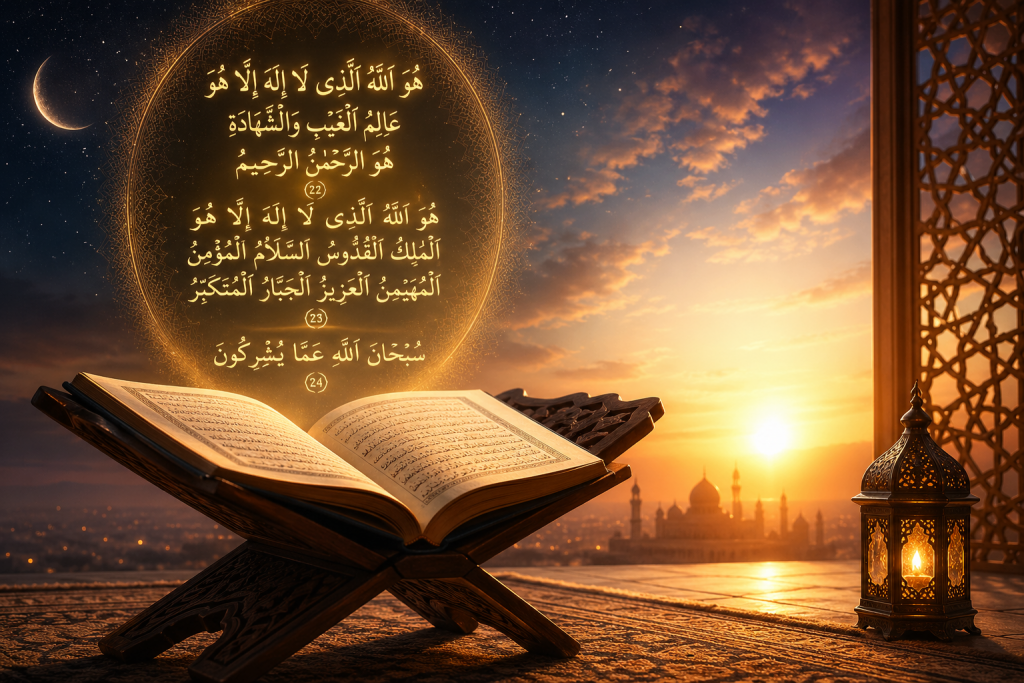
هُوَ ٱللَّهُ ٱلَّذِى لَآ إِلَـٰهَ إِلَّا هُوَ ۖ عَـٰلِمُ ٱلْغَيْبِ وَٱلشَّهَـٰدَةِ ۖ هُوَ ٱلرَّحْمَـٰنُ ٱلرَّحِيمُ
Verse 23 (59:23)
هُوَ ٱللَّهُ ٱلَّذِى لَآ إِلَـٰهَ إِلَّا هُوَ ٱلْمَلِكُ ٱلْقُدُّوسُ ٱلسَّلَـٰمُ ٱلْمُؤْمِنُ ٱلْمُهَيْمِنُ ٱلْعَزِيزُ ٱلْجَبَّارُ ٱلْمُتَكَبِّرُ ۚ سُبْحَـٰنَ ٱللَّهِ عَمَّا يُشْرِكُونَ
Verse 24 (59:24)
هُوَ ٱللَّهُ ٱلْخَـٰلِقُ ٱلْبَارِئُ ٱلْمُصَوِّرُ ۖ لَهُ ٱلْأَسْمَآءُ ٱلْحُسْنَىٰ ۚ يُسَبِّحُ لَهُۥ مَا فِى ٱلسَّمَـٰوَٰتِ وَٱلْأَرْضِ ۖ وَهُوَ ٱلْعَزِيزُ ٱلْحَكِيمُ
These verses are often recited in Arabic because their eloquence is extraordinary. The sound itself carries beauty alongside meaning. Even those who do not yet understand Arabic often feel the calm these verses bring through recitation.
For many believers, memorizing these verses becomes part of a lifelong relationship with the Qur’an. They are recited in prayer, after prayer, and during personal supplication.
Surah Al Hashr Last 3 Verses Transliteration
For learners, transliteration helps with pronunciation:
Huwallāhulladhī lā ilāha illā huwa ‘ālimul-ghaybi wash-shahādah…
Huwallāhulladhī lā ilāha illā huwa al-Malikul-Quddūsus-Salām…
Huwallāhul-Khāliqul-Bāri’ul-Muṣawwir…
Reciting them slowly and carefully helps the meanings settle deeper. Sometimes rushing through dhikr is like skimming a love letter. These verses deserve to be read with presence.
Surah Al Hashr Last 3 Verses in English Translation
A beautiful summary of the translation reveals Allah as:
| Divine Attribute | Meaning |
| Knower of the unseen | Nothing escapes His knowledge |
| The King | All authority belongs to Him |
| The Holy | Perfect and free from deficiency |
| The Giver of Peace | Source of tranquility |
| The Creator | Maker and shaper of all things |
Reading the Surah Al Hashr last 3 verses in English allows deeper reflection. Every phrase invites contemplation.
Meaning of Surah Hashr Last 3 Ayat Explained
The meaning of the Surah Hashr last 3 ayat revolves around knowing Allah through His names. These are not random descriptions. They shape belief.
When Allah is described as As-Salam, we learn peace comes from Him.
When He is called Al-Jabbar, we recognize unmatched power.
When He is Al-Musawwir, we remember every detail of creation bears His artistry.
The verses move from knowledge, to kingship, to creation almost like a spiritual ascent. First you recognize who Allah is, then you submit to His greatness, then you witness His signs everywhere.
Names and Attributes of Allah Mentioned in These Verses
One reason these verses are so cherished is because they gather many names of Allah together. That alone gives them enormous spiritual weight.
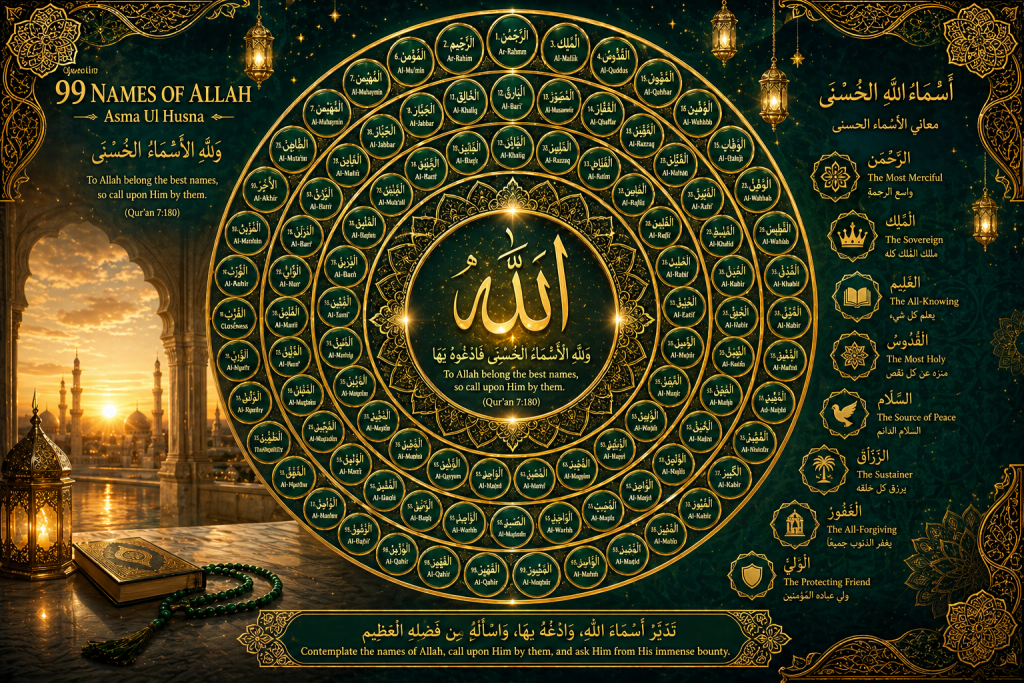
Some names mentioned include:
- Al-Malik
- Al-Quddus
- As-Salam
- Al-Mu’min
- Al-Muhaymin
- Al-Aziz
- Al-Khaliq
- Al-Bari
- Al-Musawwir
Each name is like a window. Look through enough windows, and you begin to glimpse the grandeur of the palace.
Why Are the Last Three Ayat So Powerful?
People often ask why the Surah Hashr last 3 verses are considered powerful.
Because they do several things at once:
They glorify Allah.
They teach creed.
They calm the heart.
They strengthen remembrance.
They deepen awe.
That is rare.
Many passages teach. Some comfort. Some inspire fear of accountability. These verses do all of that together.
Benefits of Reciting Surah Hashr Last 3 Verses
The benefits of reciting Surah Hashr last 3 verses are often discussed in both spiritual practice and scholarly discussions.
Spiritual Benefits According to Quran and Hadith
Believers commonly recite these verses for:
- Increasing remembrance of Allah
- Strengthening tawḥīd
- Spiritual calm
- Hope and reliance upon Allah
- Daily blessings
These benefits are not mechanical outcomes. They flow from sincere engagement.
Protection and Rewards Mentioned in Hadith
Some narrations mention immense rewards associated with reciting these verses, especially morning remembrance. Scholars discuss these narrations when encouraging regular recitation.
The important point is not treating the verses like a formula, but embracing them as worship.
Benefits of Reading Surah Hashr Last 3 Ayat Daily
Daily recitation can:
- Keep the heart connected to dhikr
- Create spiritual consistency
- Increase reflection on Allah’s names
- Bring tranquility during hardship
A daily habit may seem small, but a candle lit every day still fills a room with light.
When Should I Recite the Last 3 Verses of Surah Hashr?
Many ask: When to read Surah Hashr last 3 ayat?
Popular times include:
- After Fajr
- In morning adhkār
- After Maghrib
- Before sleep
- During stress or fear
- After salah
Morning and Evening Recitation Benefits
Morning recitation feels like beginning the day wrapped in remembrance.
Evening recitation feels like returning the soul to shelter.
That rhythm itself is beautiful.
When to Read Surah Hashr Last 3 Ayat for Protection
Many recite them when seeking Allah’s protection, especially alongside other adhkār. Protection in Islam is never superstition it is trust in Allah expressed through remembrance.
Virtues of Surah Hashr Last 3 Ayat in Quran and Hadith
The virtues often associated with these verses include:
| Virtue | Spiritual Impact |
| Dhikr | Constant remembrance |
| Tawḥīd | Strengthened faith |
| Reflection | Deeper understanding |
| Protection | Reliance on Allah |
| Peace | Emotional tranquility |
Their virtue lies not just in reward, but transformation.
What Scholars Say About Surah Hashr Last Three Verses
Scholars often emphasize reflection over mere repetition. They encourage reciting these verses while pondering Allah’s names.
That changes everything.
Recitation becomes relationship.
Words become worship.
Conclusion
The Surah Hashr last 3 verses are treasured because they gather theology, beauty, protection, and remembrance into three extraordinary āyāt. Whether you study their meaning, recite them in Arabic, use transliteration, or reflect on their virtues, these verses have a way of pulling the heart back to Allah.
Recite them slowly.
Reflect deeply.
Let every divine name settle inside you.
What are the benefits of Surah Hashr last 3 ayat?
They are associated with remembrance, peace, spiritual protection, and strengthening faith.
What is the significance of the last verse of Surah Al-Hashr?
It highlights Allah as Creator, Fashioner, and possessor of the most beautiful names.
Can these verses be recited for protection and peace?
Yes, many Muslims recite them seeking peace and Allah’s protection.
When should I recite Surah Hashr last 3 verses?
Morning and evening are common times, along with after prayer.
Why are the last three ayat so powerful?
Because they combine Allah’s names, deep meanings, and profound spiritual impact.